 Guest Post with Robert Eggleton
Robert Eggleton has served as a children’s advocate in an impoverished state for over forty years. He is best known for his investigative reports about children’s programs, most of which were published by the West Virginia Supreme Court where he worked from1982 through 1997, and which also included publication of models of serving disadvantaged and homeless children in the community instead of in large institutions, research into foster care drift involving children bouncing from one home to the next — never finding a permanent loving family, and statistical reports on the occurrence and correlates of child abuse and delinquency.
Today, he is a retired children’s psychotherapist from the mental health center in Charleston, West Virginia, where he specialized in helping victims cope with and overcome physical and sexual abuse, and other mental health concerns. Rarity from the Hollow is his debut novel. Its release followed publication of three short Lacy Dawn Adventures in magazines: Wingspan Quarterly, Beyond Centauri, and Atomjack Science Fiction. The Advance Review Copy of Rarity from the Hollow received considerable praise through Robert learning about the world of books as a novice. The final edition was released to Amazon on December 5, 2016. Author proceeds have been donated to a child abuse prevention program operated by Children’s Home Society of West Virginia. http://www.childhswv.org/ Robert worked for this agency in the early ‘80s and stands by its good works. He continues to write fiction with new adventures based on a protagonist that is a composite character of children that he met when delivering group psychotherapy services. The overall theme of his stories remains victimization to empowerment.
 Rarity from the Hollow
Lacy Dawn’s father relives the Gulf War, her mother’s teeth are rotting out, and her best friend is murdered by the meanest daddy on Earth. Life in the hollow is hard. She has one advantage — an android was inserted into her life and is working with her to cure her parents. But, he wants something in exchange. It’s up to her to save the Universe. Lacy Dawn doesn’t mind saving the universe, but her family and friends come first.
The Past is the Past
Reality-Based Inspiration in Fiction
Originally rejected by elitist publishers, George Orwell’s Down and Out in Paris and London (1933), semiautobiographical, is still regarded as one of fiction’s most inspiring works. The Cancer Ward by Alexander Solzhenitsyn (1967) similarly inspired people concerning a disease that continues to devastate families worldwide. Separated by decades, what do these two books have in common? In addition to great writing styles, the technique used to inspire readers is similar. There are many other examples of books that inspire by: if you think that your life sucks, read this. It will make you feel better. This book helps you appreciate what is going right in your life because what’s going on in the lives of characters in the story is awful.
Several notches above listening to an inspirational speaker selling a get-rich scheme, such as was once popular in real estate, other books reach for human drive and ambitions to inspire. How to Win Friends and Influence People by Dale Carnegie (1938) is the best selling self-help book of all time. A cornerstone was its wisdom on how to increase earning power – you can influence the behavior of others by how you behave toward them. A son of a poor farmer, Carnegie’s success (except in marriage) made fiction writers of millions of people in their relationships with others. As a former door-to-door Amway salesperson during college, attitudes and skills shared by Carnegie did prove effective in me paying for my books and tuition. I became a master of the compliment, heartfelt or not. Yes, we can become inspired to achieve material success.
Not counting the thousands of other great books which have inspired us to diet, eat more nutritionally…, one of my personal favorite inspirational books was The Art of Happiness (1998) by Dalai Lama. In contrast to books that inspired pursuit of materialism, this one encouraged us to reflect on our inner selves and to find out what happiness truly means. It questioned whether material success equates with true happiness. I don’t know about you, but I have a hard time concentrating on self-reflection if I’m worried about paying the electricity bill. For those who have achieved financial security, and who have found that happiness is elusive despite wealth, books like this one have been successful even if many of the concepts promoted in them cannot be proven to be fact.
Of course, The Bible has inspired countless individuals worldwide. So have Shruti for believers of Hinduism, The Tripitaka for those holding faith in Buddhism, Tanakh – the Hebrew Bible, and several other religious texts. For me, while most familiar with Christianity, the inspirational technique employed is fear: to prevent one’s eternal damnation to everlasting Hell – comply with the scriptures.
Apparently, threats can be inspiring. Quite a few folks who post on Facebook seem to believe so. The principle religious text of Islam is the Qur’an. It would be impossible to count the number of hate posts in recent months that inspire people to vote for politicians and policies because if you don’t, in effect, Muslims will rape all white Christian women unless they marry them first during childhood – all supposedly found in this book.
Have I gotten off on a tangent? This article was supposed to be about inspiration in fiction. Before I consider addressing superheroes, John Wayne-type characters, and the G.I. Joes, please note that, depending on reader interpretation, there may be a fine line between fiction and nonfiction. I’ll stop there because I don’t want to offend any readers of this blog. And, because that was precisely my dilemma as I wrote my debut novel, Rarity from the Hollow. How could I inspire sensitivity to the plight of maltreated children without taking readers outside of their comfort zones?
All things considered, I knew that I didn’t want to: (1) write something so tragic that it merely promoted readers to be grateful that their own childhoods had not been filled with horror; (2) sell the prevention of child maltreatment based on the positive economic impact that it would have on society or as a tax deductible contribution; (3) promise people that they will feel better about themselves if they contribute to the prevention of child maltreatment; (4) threaten people with damnation if they ignore needful kids; (5) or, warn people that maltreated children will grow up to victimize others, such as increased crime, if they don’t do something to help them now. All that has been tried before and child victimization rates are going up: new federal data shows nearly 3-percent rise in child abuse.
On the other hand, I also didn’t want to draw a veil over such a huge social problem as child maltreatment when writing Rarity from the Hollow. Some Young Adult novels that I’ve read, authors address childhood maltreatment without pulling a single one of my heart strings. Yes, there are wonderful books for children similar to Bobby and Mandee’s Good Touch / Bad Touch by Robert Kahn (2011), but as a retired children’s psychotherapist determined to write a novel that could potentially impact social policy, I knew that my book wouldn’t target children or even teens consumed with plot-driven escapist fiction.
I decided that Rarity from the Hollow would sensitize and inspire adult readers who were not prudish, faint-of-heart, or easily offended. I later realized, as the Advance Review Copy of my novel was being circulated, this designation carried an unintended message about my story to some potential readers and book reviewers – that it contained heavy sexual or violent content. Before the release of the final edition of my novel to Amazon on December 5, 2016, I wrote an article that was published on a book blog in an effort to clarify its content.
I’m a retired children’s psychotherapist. While participating with the editor on the final edition, as mentioned above, I sure had collected a bunch of elements that I didn’t want to portray in my debut novel. Most of the writing had been done after coming home drained from having worked at the local mental health center all day. Exhausted, at some point I made a very inspirational decision for me. Half of author proceeds are donated to the prevention of child maltreatment. http://childhswv.org I’m not sure if this aspect of the project has inspired others, but it did the trick for me.
Rarity from the Hollow uses soft science fiction as a backdrop, but has elements of other genres: fantasy, everyday horror, a ghost — so it’s a little paranormal, true-love type romance, mystery, and adventure. The content addresses social issues: poverty, domestic violence, child maltreatment, local and intergalactic economics, mental health concerns – including PTSD experienced by Veterans and the medicinal use of marijuana for treatment of Bipolar Disorder, Capitalism, and touches on the role of Jesus: “Jesus is everybody’s friend, not just humans.”
Several book reviewers have commented that the story is unique. Here’s one: “…soon I found myself immersed in the bizarre world… weeping for the victim and standing up to the oppressor…solace and healing in the power of love, laughing at the often comical thoughts… marveling at ancient alien encounters… As a rape survivor… found myself relating easily to Lacy Dawn… style of writing which I would describe as beautifully honest. Rarity from the Hollow is different from anything I have ever read, and in today’s world of cookie-cutter cloned books, that’s pretty refreshing… whimsical and endearing world of Appalachian Science Fiction, taking you on a wild ride you won’t soon forget….”
I selected science fiction as the backdrop because it was the best fit by process of elimination. The way I see it, the systems in place to help maltreated children are woefully inadequate. I felt that the straight literary, biographical, exposé, memoir, or nonfiction genres wouldn’t work because the story would have been so depressing that only the most determined would have finished it.
I felt that Rarity form the Hollow had to be hopeful. I wanted it to inspire survivors of child maltreatment toward competitiveness within our existing economic structures, instead of folks using past victimization as an excuse for inactivity – living in the past. I didn’t think that anybody would bite on the theme of a knight on a white stallion galloping off a hillside to swoop victims into safety, like in the traditional romance genre. That almost never actually happens in real life, so that genre was too unrealistic as the primary. There was already enough horror in the story, so that genre was out too. What could be more horrific than child abuse?
Readers who are used to the fantastical may feel less inspired about my bottom line to achieve a HEA ending for Rarity from the Hollow. While I don’t want to spoil anything for prospective readers, and I don’t think that this will, in the spaceship on their way home after saving the universe, Lacy Dawn’s father asks her, “Will you ever forgive me?” She answers, “No, but I will always love you.” Such is the optimal resolution of real-life child maltreatment cases. While it may never be forgotten or forgiven, the ability to put the past in the past and to move on with our lives regardless of the pain that we all have suffered from time to time, is the key to achieving true inspiration in fiction and in life.
 I honestly expected more juicy stories and less reflection, but perhaps that was a hallmark of this being his second novel – perhaps they were all exhausted by his first novel, ‘Do No Harm’. For me then, there was too much memoir and reflection on aging rather than substance about the joys and upsets of being a neuroscientist. I can accept a certain level of introspection, but I’m not certain what regular readers would pull from this novel.


 From acclaimed children’s author José Patterson comes a new story that will hit home.
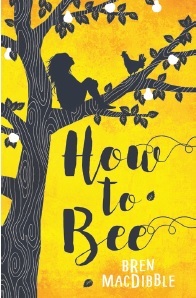 In a future fiction, it’s possible this is going to become common place. Bees are dying out, and despite things such as the somewhat ill informed flower planting schemes by ?cereal? companies, unless we pick up our game with killing bees with pesticides and so forth. A world without fruit would be pretty miserable.
 This was a disappointment of a book. Not only was I frustrated by the constantly changing perspectives that only built a tiny picture of what was happening, the ending was not an ending. Oh my goodness. I’ve just realised that this was the second book. So that means I can expect a third book, so I should just accept the ending. Well, I can tell you reading the first novel probably wouldn’t have made any difference to my non-enjoyment of this one.

 Normally the ‘literature’ style of writing might have put me off – it’s filled with beautiful prose that waxes lyrically about the lines between Man and God. Don’t expect it to ‘end’ in a conclusive manner, instead the reader is left to wonder what good can change in the world.
 While the stories were quite entertaining and there was plenty of variety, something about the tone of the novel made it feel slightly awkward to read. Ah yes. Is it in present tense? My literature interpretation is a bit rusty. Anyway, I’m sure it was written in this manner to give a sense of presence and urgency to the life situations, however it just made it awkward for me to read.
 I wanted to reread
 I’ll be the first to say that a lot of the language in the novel is offensive. It’s particularly offensive to gay people, eg. “limp-wristed, pillow-biting, doughnut punching bum bandit”. Which, given the subject matter, I’m not surprised that it’s targeted so negatively. But I also appreciated the hard feelings and accuracy of that. It felt ‘real’.