Wiser
Getting Beyond Groupthink to Make Groups Smarter
Cass R. Sunstein & Reid Hastie
“Since the beginning of human history, people have made decisions in groups—first in families and villages, and now as part of companies, governments, school boards, religious organizations, or any one of countless other groups. And having more than one person to help decide is good because the group benefits from the collective knowledge of all of its members, and this results in better decisions. Right?”
 This book was not for me. Although it’s in the “management” section of the library’s non-fiction, it’s all about theory and there is nothing practical or examples of what to do next. Not only is it theory, but it also doesn’t show “the right answer” at the conclusion of the theories. It basically says this can happen, and this can happen and this can also happen. It has no point or message that the book is conveying.
The message of the book is that group decisions are hard due to a number of reasons. These include: an individual’s bias, and how humans tend to agree with others – this causes a cascade of errors. Although the book is structured in chapters of “how groups fail” and then “how groups succeed”, the chapters didn’t really mean anything. The authorities continued to use examples of how groups fail in the succeeding section. Honestly I still don’t know the “solution” to this problem, and how to succeed.
The authors mentioned the same examples more than once, including writing that they would refer to it again in a later chapter. I don’t know why it couldn’t just be fully explained then and there? By the end of the Introduction I had already been convinced that groups fail in their logical thinking all the time, and I was ready for the solutions. I then fell asleep, lost interest and put the book down several times. The only semi-redeeming factors were the few story examples in the tournaments section and the fact that the authors used references for their work.
I did finish this book, but it’s only getting 2 stars. Don’t bother – there are better things out there. Anything is better than this.


 This book is a small, short quick read. It’s a nice little pocket size read. Unfortunately, I don’t think I really got anything out of it. It has some nice tips, including exact questions for team surveys or improving in general. However I felt I have already implemented most, if not all, of the things mentioned in it. I guess it’s a nice little reminder that I’m on the right track.
 Suzi picked this book up from the library, so the following review is hers. I was after a book that wasn’t theory based for a change, and had more real life examples and stories to learn from. he title misled me, sadly. “Leadership lessons from Australia’s iconic change makers” – from this, I really expected actual lessons, stories and examples. However, what I received was 2-3 pages from each leader of wishy washy, meant to be inspiring and motivating, crap. This was the type of motivating crap that says “lighten up” or “the measure of success must be yours” or “failure isn’t falling down, it’s remaining where you’ve fallen”. This was paired with a quote on a coloured background page in between each leader’s lesson. If I wanted motivational sentences, I’d read ‘The Secret’!
 It’s that time of year where I try to purge the books that haven’t been read in a year from my shelf. Several have somehow missed by rader – perhaps I couldn’t face this one with another epidemic going on. I can think back to the end of 2019 and remember that I was very grateful that COVID-19 wasn’t vector-borne, because that would make it almost impossible to eradicate. Unfortunately, life a year on suggests that there is still more disease to deal with (as I write this review, the first vaccines are being administered in the USA).
 This non-fiction book about senior dogs was quite an interesting read, but also a disappointing one. I had previously enjoyed Greaves’
 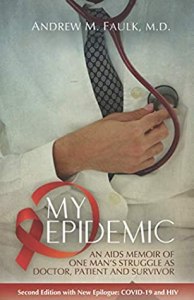 What is there I can say about this book? It is both heartbreaking and uplifting, sad and joyful at the same time. The memoirs that I have read recently didn’t pass muster. My Epidemic does. Andrew shows sensitivity and self-awareness, and his story does bring something new to the bookshelf. To me, Andrew showed the early tenants of ‘active listening’ to his patients, even as he faced most of them going too-early to the grave. This naturally took a toll on this compassionate doctor, leading to him leaving the profession.
 I absolutely love Lencioni’s books and this one is no exception! Like most of his other books (except this
  I requested this book because I’m a geneticist and I’m always excited about genetic disorders (remind me at our next dinner party if you want to hear about my mechanic’s son’s disorder). Unfortunately for me, this book had less about the science and some inaccuracies in it. Fortunately, that’s not really what this book is about.
 This book is a bit of a disappointment from this author. The way it comes across is as a kind of summary of his 5 other books. His other 5 books are fables and go into each item in more detail. The idea of this book was to put each thing in context, however I felt that was lost. He said at the start that you didn’t have to have read his 5 other books first before this one.
 This nugget of a book takes each element of family life and breaks it down into how you can change the way you think about waste. It is basically essential that you have children to be thought of as a ‘family’ here. I think this book is best aimed at families with young(er) children, although it does have some hints about waste for teenagers. I think that if you actually sat down and tried to turn into a zero waste family in only 30 days, you’re going to feel overwhelmed by it all, despite Anita’s book being “gentle”.