One Hundred and Eleven Tweetable Inspirational Life Purpose Quotes: A Book of Original Thoughts
Suzanne Strisower
What can I write about ‘A Book of Original Thoughts, Your Life Purpose is Just a Tweet Away’? Shouldn’t it be speaking for itself? Nevertheless, I was sent a copy for review a long time ago now, and I didn’t know what to do with it.
 Honestly, I think if I had paid for it, I would be asking for my money back. I’m not even certain it’s good enough to give as a present. There are heaps of little books like this that claim to change your life for you by just a little message here and there, and I’m not buying it.
I browsed through this in the hopes that something awesome would just out at me… But it didn’t.
Now, would it be irony that this book is a paperback, and it’s designed to be used as inspiration for Tweets, an entirely digital creation? You can source this information for yourself, and don’t let buying a book get in the way of actually doing something with your life.
As someone I read recently said, don’t let your life just get covered up with self-help books which can block the light just as well as depression if you don’t actually use them.


 The first half of the novel kept me enthralled, but this petered out in the second half. I was fascinated by the gymnastics, not by the politics. In the end, I wasn’t sure what I was supposed to take away from the novel. Translated from French, I think this novel may have lost some of its charm.
 As long as you can get past the extreme amounts of explicit swearing in the prologue and first chapter, you’ll be golden for reading this novel. If that sort of thing bothers you, I advise skipping straight ahead. I put the book down and tried to take a nap instead of keeping reading at that point. Anyway, I persevered and it got better from there.
 This book was actually enjoyable. I was hesitant. As I say though, Reed is from the people angle. After his son’s accident, he’s one of the people who have pushed forward from the ground up to make a difference in politics to change ordinary people’s lives. As a geneticist, this gets into all sorts of ethical ideas and messes, some of which are discussed here.
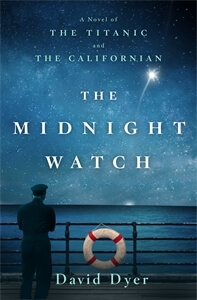 What I loved was that the blending of fact and fiction made me feel at home in the novel. I didn’t object that I never really understood everything behind Lord’s motives. I didn’t mind that there was no happy ending.
 As always, I preferred the personal stories rather than the advice given in this novel. I think if you are going for a more ‘traditional’ career (not a university and teaching focussed career like mine) this novel is going to be perfect for you. I’d choose it as a gift for someone just starting out at their first job.
 This novel covers only part of Neil’s journey! It is astounding how much he has travelled on his trusty bike. I can’t believe it, but then I think of other people who have cycled around the exterior of Australia and straight across the middle. Still though, its amazing what one man on a tiny bike can do if he is determined.
 This novel is a bit of a mix between memoir, textbook and examples. It doesn’t profess to provide any concrete answers. Instead it explores the history of OCD, different interesting cases of OCD and indeed the almighty DSM-5 that is used for categorizing mental illness everywhere.
 Wow. This novel. Non-fiction is winning at the moment. This was fantastic and well-written. I felt myself at Tara’s side, and I absolutely empathised with every situation she found herself in, likely or not. We are walked through her childhood and highschool years, and then her ‘career’ after that. There are so many situations that Tara found herself in, and it feels like she has done justice to describing them in this novel.
 Honestly, this novel wasn’t quite right for me. It’s history, written in a sort of fictional, accessible format. Unfortunately I’m not interested in history at the best of times. I was hoping that this novel would pull me in a bit, but it wasn’t quite powerful enough to overtake me. I read selections of this, and enjoyed those. I made sure to just pick those ones though, English history bores me silly (but I can totally go for the Berlin Wall).