I have a series of novels that I have never finished reading and in some cases, couldn’t face reading at all. In the interests of freeing up space on my bookshelves, and letting other people have a chance to read them, I have released these novels on Book Crossing. To see other books I have previously released, see here.
 Tales of the Zodiac: The Goat’s Tale (Volume 1)
P.J. Hetherhouse
This novel was published in 2014, so I’m pretty sure it’s been sitting on my shelf for the full 3 years after the author sent it for review. Although the sales copy obviously entranced me, I couldn’t get into the first chapter. I usually like things based on Celtic mythology, so I’m not sure what went wrong.
 Windwitch
Susan Dennard
I actually received this novel for review from Pan Macmillan January 2017 after requesting it! When it arrived however, I realised that it was the second in a series. I HATE it when that happens. So off I went to find the first novel, and fortunately found an eBook copy. So I started reading that… then was so disgusted that I just couldn’t face it any more. So I didn’t even attempt this one.
 Eyes Like Lighthouses When the Boats Come Home
Dane Cobain
Although I loved another of Cobain’s novels, Former.ly and his other, No Rest for the Wicked, was ok, I’m just not into poetry. Thus I am letting this one into the wild to be free. Someone else who loves poetry will probably appreciate it, and I wish them luck (and hope they decide to read Dane’s novels as well).


 The ending! Oh the ending. It should have been more bittersweet, but it wasn’t. Actually, it was just a tad cloying? And I would have appreciated a little more closure. I can say that the rest of the novel was not leading up to that at all. I think this is a problem I had with Lord’s first book too… Perhaps I should have anticipated it more, but I am warned for next time now (and there had better be a next time)!
 I feel like this novel is just another in a series trying to encourage girls into STEM (Science, Technology, Engineering and Math) fields. The last I read,
  And how does everyone not notice anything wrong with her? If she looks like a junkie, why is she not being sent more sternly to a hospital? To a counsellor? Even if she refuses to go, the fact that her self-preservation is completely out of whack doesn’t explain why people are blind, deaf and dumb.
 The Second Coming: A Love Story
 NIGHT PEOPLE, Book 1 – Things We Lost in the Night: A Memoir of Love and Music in the 60s with Stark Naked and the Car Thieves (Volume 1)
 Delivering the Phantom Moon
 This was like eating a really bad, stale peanut butter and jelly sandwich. I chewed my way patiently through the first 1/4 of the book, sitting through honestly a quite boring backstory and the party lives of Cat, Bess and some random other person they went to school with. Then, I got some tasty jelly, where we got into the crux of the investigations into the murder and a bit of development of a on-again off-again relationship between Cat and the detective. AND THEN, someone forgot to put the peanut butter in. The next 1/4 was simply Cat and Bess being swaddled around with Cat hating the experience and Bess being pretty happy about it. Then there’s another bit of bread of nothing even really happening until the end. I didn’t care about Cat or Bess enough for it to matter at that point.
 I honestly expected more juicy stories and less reflection, but perhaps that was a hallmark of this being his second novel – perhaps they were all exhausted by his first novel, ‘Do No Harm’. For me then, there was too much memoir and reflection on aging rather than substance about the joys and upsets of being a neuroscientist. I can accept a certain level of introspection, but I’m not certain what regular readers would pull from this novel.
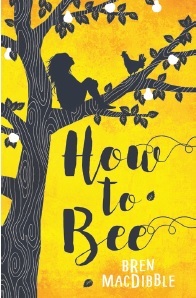 In a future fiction, it’s possible this is going to become common place. Bees are dying out, and despite things such as the somewhat ill informed flower planting schemes by ?cereal? companies, unless we pick up our game with killing bees with pesticides and so forth. A world without fruit would be pretty miserable.
 This was a disappointment of a book. Not only was I frustrated by the constantly changing perspectives that only built a tiny picture of what was happening, the ending was not an ending. Oh my goodness. I’ve just realised that this was the second book. So that means I can expect a third book, so I should just accept the ending. Well, I can tell you reading the first novel probably wouldn’t have made any difference to my non-enjoyment of this one.