 An Interview with Jimmy Brandmeier, author of Be Who You Are, A Song For My Children
Jimmy Brandmeier is “the Dad” in a beautiful, wacky family of three daughters—Jamie (age 24), Jessie (age 23), and Josie (age 19)—Paula his wife of twenty-five years (ageless), two doves, a couple of goldfish, and a cat named Squeakers. Though their loving yellow lab, Satchmo, went to doggy heaven, his doggy hair will always be with them.
The couple moved their family from California to Wisconsin to raise their kids closer to family. They managed to be hands-on parents through the demands of two busy careers—Jimmy, a music industry veteran flying back and forth to California, and Paula, an airline pilot flying back and forth to Europe. Flexibility and priorities kept them from missing a beat in their children’s lives.
Apart from family, Brandmeier is a Telly Award winning composer/producer and a Summit award marketer. He’s worked directly with celebrity artists raging from Eric Clapton, Carole King, Avril Lavigne and Joss Stone, to Wynona Judd, Jason Mraz and Dave Mathews among others; written jingles for brands from Mazda to Mattel.
Brandmeier is a seasoned jazz flutist who has played everywhere from town halls to Carnegie Hall and a teacher, passionate about inspiring students to create a life of abundance and fulfillment. He has a deep-seated dedication to help people transcend inner and outer obstacles and understand the point of life, so they may live fulfilled and happy lives—which at its core, is the essence of his book Be Who You Are, A Song for My Children.
Why did you write Be Who You Are, A Song For My Children?
I didn’t intend to write a book. The book started out as a song, which took on a life of its own. Each line grew into a separate topic. The lyric spun like a thread that wove into the prose that unfolded into Be Who You Are: A Song for My Children. I was grabbed by the gut, by what turned out to be the tip of a message, which expanded as I wrote.
I wanted my three daughters to hold on to their authenticity—to the unrepeatable sparkle in their eyes—no matter what. I thought the right words could protect them; shelter them from the inner and outer storms of life. I didn’t want life suck the life out of them. And I wanted to leave them something they could lean on, long after I’m gone.
But it wasn’t until reaching the end the book that I fully understood what the book was about—what it really means to, Be Who You Are. That unexpected message has unfolded into an unexpected life mission, one that I believe will help people be happy no matter what happens and live their best lives.
So, you never expected your song to grow into a 368-page book?
Writing the book was a surprise. But the process of writing the book took me on an “unexpected” spiritual journey. Turns out the message I was grabbed by the gut to instill in my three daughters was the one I most needed to hear. Be Who You Are. And again, there are layers to being who you are, most people don’t think or care about.
 So, what’s the overall message of Be Who You Are, A Song For My Children
The big picture message has three parts.
1-The Framework of Life: There are two roads, which layer and lead towards or away from who you are.
The inner road and sole purpose of life: Transcend the ego. Rise above fear (ego) into the essence of who you are. (Love!)
The outer road and secondary purpose of life: Make the most of yourself, your talents, your livelihood, and your life in this world. (Live!)
All you can imagine, do, be, achieve or experience is found on these two roads. The quality of your life depends on the relationship between them.
2-The Big Mistake:
Believing the outer road is the only road that matters.
Believing the outer road leads to happiness.
Everybody is scrounging for happiness in all the wrong places. Happiness is not an external event. Your inside life “is” life.
3-The Point:
The real journey in life is the voyage from fear to love.
Casting off from the ego and returning to who you are—born again into the love of your infinite essence—is the point and purpose of life.
Does being who you are mean, doing what you love?
Doing what you love is a beautiful part of life’s big picture, and part of the overarching message of this book. Doing what you love can also be part of the curriculum in the course of authenticity. It can fade the façade of appearance, into an opening for your essence to shine through like the sun.
Lose your self (ego) in what you love, and you’ll find your Self (Essence) through what you love.
But doing what you love is only a portal to the point, which is perfect happiness—being who you are, inside and out. And finding happiness on the outer road only, no matter how much you love it, is an impossibility. As comedian Jim Carrey says . . . “I wish people could realize all their dreams of wealth and fame, so they could see it’s not where you’ll find your sense of completion.”
What is the meaning of your cover illustration—two separate puzzle pieces, that when aligned, transform into birds soaring free?
The two puzzle pieces represent the inner and outer roads moving into alignment. When the amazing outer road of our talents, dreams, passions, career, finances, relationships, achievements, accolades, adventures, and motivations merge with the spiritual purpose of the inner road—the ultimate and only point of life. When heart and heaven beat as one, as the song lyric says—you’ll be happy, no matter what happens. You’ll be fearless. You’ll be free. You’ll have reached, The Point.
What would you say is the best way to improve your writing—to master your craft?
I probably come from a different writing background than most of the authors reading this. I’m a musician. My first non-fiction book started out as a song.
As a composer, I’ve been immersed in writing songs, jingles, scores, music beds and anything else the client of the moment asked for. What comes first—words or music? Answer—the phone call. But certain truths for mastering the mechanics of writing—in order to free the soul of writing—are universal. The most powerful and least glamourous tool of all . . . butt in chair.
Habit is a hammer that builds virtuosity. Consistency activates a creative force in the
universe sending us insights impossible to come up with sporadically, on our own. As Julia Cameron, author of The Artist Way, says, “were not thinking something up, were taking something down.” As I point out in my book, “world class dreams, require world class routines. Your goals and dreams must match your habits and routines.” What’s the difference between an artist and an amateur? According to Malcom Gladwell author of Outliers, about 8000 hours. Amateurs put in 2000 hours, by age 20, artists who’ve mastered their craft, put in 10,000. Talent is not enough.
I’ve noticed that many aspiring music students do not listen to music. I’ve met aspiring authors who do not read. If you want to be a better writer, be a better reader . . .
Read! Read! Read!
Creativity—at least the non-contrived, unexpected, happy accidents kind of creativity—originates almost entirely in the sub-conscious. You can program the sub-conscious with cable news and video games, or inspiring books, that shake the soul and expand your consciousness. Either way it’s going to come out in your writing.
I have heard of writers that could only write in one place – then that cafe closed down and they could no longer write! Where do you find yourself writing most often, and on what medium (pen/paper or digital)?
I write most often in a quiet place, in my home. The challenge is . . . it’s not always quiet. In a crazy household filled with three wonderful daughters, (for whom I wrote the book), a fantastic wife, dogs, cats and pet rats, its necessary to escape to a coffee shop to get in the zone.
But for me it’s more about “time” than “place.” I’m most creative and tapped in to the muse, early in the morning. I set up my “writing chair” the night before—wake up at 3AM, meditate, pray, visualize and sip that first magical cup of coffee. After saying hello to my writing partner—a great big Evergreen tree outside my window—I get to work. (I know. Weird! Kind of like Tom Hanks talking to his soccer ball in the movie The Cast Away), But hey, me and the tree have been through a lot of writing together.
It is easier to slip behind the veil of ego, and the white noise of world early in the morning. The wee small hours of the morning opens the channel, for insights to flow through me, (not from me) with ease. I call it a dialog with divinity. Call it the force, the source, the muse, the universe; It doesn’t matter—it’s all the same reservoir of creation to me.
On average, I write for 90 minutes and take a break, then write another 60 to 90 minutes. I walk away after that, and deliberately quit thinking about writing. It’s part of the creative process, as described by Graham Wallace in the book, The Art of Thought. Know it or not, whether you’re writing a book or baking cupcakes, the same 4 stages are happening.
1- Preparation. Questions, what does the story want, what do I want to say etc.
2- Incubation: Quit writing let the mind/universe process questions and problems.
3- Illumination: Aha! The answer/idea/insight comes when you least expect it.
4- Verification: Plug the answer and verify how it works. Adjust accordingly.
When I’m done with my morning, preparation stage, I work out, wake the kids, do errands in order to let the writing, incubate. Because the initial creative heavy lifting is over in the morning, total quiet isn’t necessary. I can write at a coffee shop for the next session. When I come back for round two, everything flows much easier.
And one more writing, so called, place: I love to walk my writing. Walking frees the mind. I’ll go on long 2-3-hour walks and record insights, ideas and paragraphs on my iPhone. I’ve written full songs without touching an instrument. When I get back to my desk and enter the verification stage, the ideas I’ve walked out of me generally stand up. Per the last part of this question. I write on a Mac Book Pro and always keep my iPhone handy.
Before going on to hire an editor, most authors use beta-readers. How do you recruit your beta-readers, and choose an editor?
My wife belongs to a local book club that meets once a month. They were nice enough to beta-read my book. We had a party at our house for the book club. It not only helped the writing process, it was a lot of fun.
 Eve is a naive girl who you want to like as a protagonist. But without more from her it is impossible to do so. I get that it is difficult to get inside her head – that’s why the EPO has Holly after all. But that’s why there are split perspective chapters! I much preferred Bram as the alternative protagonist. Good work Bram on having an actual personality, but you couldn’t carry the novel by yourself when there were other fatal flaws.


 Bobby’s devotion to his mother is admirable, is is his devotion to his rather difficult little brother. However, a child should never be put into this position. I can’t believe that the professional carer for his mother is such a numskull. Or actually I can. Health professionals that aren’t nurses aren’t always as well trained as they could be.
 What I wasn’t too convinced by was Kalina’s ‘secrets and lies’. I’m pretty sure that except near the end, Jovan knew most of her secrets. I do agree with Kalina that Jovan should back off sometimes, because she needs the right to look after herself for a change. The interplay between the siblings was really believable.
 I really wish I hadn’t wasted my time on this novel. I started reading it once and then put it down. I was feeling like a fantasy novel so I picked it up again right from the beginning. More fool me. The action is surprisingly slow, and the main character Raven isn’t inherently likable. I liked Eighth, but his mind was so fragmented that I could barely follow along what it meant to be a Nahx.
 I allowed myself to reread this one to put me in the right frame of mind to write a review. Knowing (vaguely) what would happen next didn’t stop me from being on the edge of my metaphorical seat. Ah! Serene! Why don’t you see what is in front of your face? I had forgotten the wonderful nuances that Sanderson build into this novel, and discovering them again was almost as pleasant as the first time.
 An Interview with Catherine Evans, author of The Wrong’un
 Before going on to hire an editor, most authors use beta-readers. How do you recruit your beta-readers, and choose an editor? Are you lucky enough to have loving family members who can read and comment on your novel?
 Despite being in the same world as Tally Youngblood’s Uglies/Pretties/Specials (and Extras), Impostors is well and truly its own novel. The world has moved on and the technology has significantly advanced. Imagine a world where even the dust is spying on you! Rafi is trained to kill, but has her own personality trapped in there.
 I found this novel lacking and predictable. Of COURSE she’s going to fall for an inconvenient guy. OF COURSE she’s suddenly going to gain a backbone. Theo is a perfectly fine protagonist, but she’s just not believable. Her behaviour, particularly when she betrays someone close to her, is just repulsive. I couldn’t get behind her quick changes in personality and pathetic excuses either.
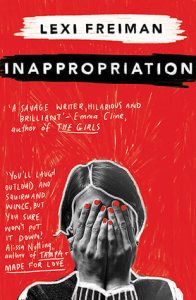 I got a couple of chapters in, but I couldn’t work out the purpose of the novel. What was I gaining from wading through the psyche of Ziggy? If I wanted to read something written in a thick literary and nuanced style, I would have picked up an