
7 Novels About Mental Illness
Stephen Bitsoli
Today I have a guest post from Stephen Bitsoli to bring a selection of novels that depict humans who struggle with mental health issues. It’s a topic close to my heart, so I’m truly delighted to have him here. I confess that I haven’t read any of these, so my to-be-read pile just got even longer!
Mental health issues, from major depressive disorder to chronic substance abuse, are part of the human condition, and so perfect fodder for fiction. Not every author who tackles the topic is up to the task, however.
Authors with a first-hand acquaintance of the subject, among themselves, family members, or loved ones tend to speak to mental health disorders with a realism that just can’t be beaten.
If you’re interested in some of the best fictional explorations of mental illness, these seven classic-to-recent novels should be on your reading pile.
 One Flew Over the Cuckoo’s Nest by Ken Kesey (1962). One Flew Over the Cuckoo’s Nest is a 1962 novel, perhaps best-known for its wildly successful 1963 stage and 1975 film adaptations, but the original novel stands on its own. Set in a psychiatric ward, run by the tyrannical and possibly psychopathic “Big Nurse” Ratched, it depicts her conflict with a disruptive new patient Randle Patrick McMurphy, as narrated by a fellow inmate, the schizophrenic “Chief” Bromden. McMurphy has faked mental illness (though some analysts have diagnosed him as having antisocial personality disorder) to avoid hard-time at a prison work camp for battery. Inspired by Kesey’s experience working at the psych ward of a veterans hospital in the 1950s, the novel focuses on the mental health care system. So-called medical “treatments” then included electroconvulsive (electroshock) therapy (ECT) and lobotomy.
 The Bell Jar by Sylvia Plath (1963). The Bell Jar is a semi-autobiographical account of a young woman growing up in the 1950s and dealing with societal expectations and mental illness. The story follows Esther Greenwood, a young woman who struggles to feel excited about anything, including winning a prestigious internship at a New York City fashion magazine. She has a mental breakdown and fixates on death and suicide. The novel’s motif of a bell jar “suffocating” Esther’s world parallels Plath’s struggles with depression, suicidal ideation, and what may have been bipolar II disorder. It also describes psychiatric treatments of the time such as insulin shock therapy and ECT.
 Beloved by Toni Morrison (1987). Beloved tells the story of Sethe, a former slave now living in freedom in Ohio after the Civil War. She is still mourning the death of her baby—she may have postpartum depression in addition to post-traumatic stress disorder (PTSD) from her enslavement—who had no name but “Beloved.” Sethe believes her baby’s spirit is haunting her. She is also tormented by the memories of life on the plantation. The theme of PTSD is similarly explored in another character, Paul D, who relives his physical and sexual abuse. Inspired by the true story of Margaret Garner, Beloved is a brutal account of the atrocities of slavery and the effect of trauma on mental health that everyone should read at least once in their lifetime.
 She’s Come Undone by Wally Lamb (1992). She’s Come Undone follows the story of Dolores Price, who, as a teenager, suffers emotional neglect due to her mother’s postpartum depression and her parents’ divorce. Later she binge eats due to her depression (or possibly cyclothymic disorder) until morbidly obese, experiences PTSD following a rape, and ends up in a wellness facility after a suicide attempt. After her release, a bad marriage, and more tragedy, she finds peace in her late-30s and accepts that her life is both good and enough. Lamb’s first published novel, an early Oprah Winfrey Book Club selection, has been translated into 18 languages. It’s an exploration of trauma, hope, and radical self-acceptance.
 It’s Kind of a Funny Story by Ned Vizzini (2007). It’s Kind of a Funny Story follows the story of Craig Gilner, a teenager who is filled with ambition. After he’s admitted to a prestigious school, Craig finds himself buckling under the pressure from his teachers and parents. This eventually leads to disordered eating, depression, and thoughts of suicide. Craig starts taking medication but throws it away when he believes himself to be “cured”, causing a breakdown that puts him in a psychiatric hospital. The novel, based on author Ned Vizzini’s experiences in a psych ward, deals with themes of suicide, mental health care, and how society views those with psychological issues.
 Wintergirls by Laurie Halse Anderson (2009). Wintergirls is the story of Lia, a teenage girl struggling with survivor’s guilt after the death of her best friend Cassie. In the wake of Cassie’s death, Lia develops obsessive behaviors, including anorexia and cutting. She feels isolated from everyone and like she is unlikely to get help. As her self-destructive behaviors grow worse, Lia is haunted more insistently by Cassie’s spirit. While some critics voiced worries that Wintergirls could encourage teens to engage in disordered eating, the 2009 novel largely received praise for its gritty exploration of self-harm, guilt, and hope.
 Turtles All the Way Down by John Green (2017). John Green’s novel Turtles All the Way Down tells the story of Aza, a 16-year-old girl struggling with loss, anxiety, and obsessive-compulsive disorder. These manifest in spiraling thoughts, safety rituals, health anxiety, and feelings of depression and isolation. Anyone who has suffered from similar mental health struggles will identify with Aza as she finds a new idea to fixate on: finding the missing billionaire Russell Pickett, the father of her classmate Davis, with who she begins a relationship. All the while, she fears that her mental health struggles will make it impossible for her to have a normal life.
Sources
- h2g2.com – Diagnosis of RP McMurphy from One Flew Over the Cuckoo’s Nest
- theatlantic.com – The Literary Insights of Sylvia Plath’s College Thesis
- shondaland.com – Toni Morrison on ‘Beloved’
- nimh.nih.gov – Post-Traumatic Stress Disorder
- courses.lumenlearning.com – Cyclothymic Disorder
- suicidepreventionlifeline.org – Help Someone Else
- sunshinebehavioralhealth.com – 60-Day Addiction Rehab Programs
If you’d like to read more by Stephen Bitsoli, here’s the link to his website – Sunshine Behavioral Health


 Living in a country that was situated between the Western and Eastern Europe in the second half of the twentieth century offered her challenges from both different geopolitical and cultural worlds. Her parents came from two opposite sides: her father from a Communist environment and her mother from a poor Catholic family. They had quite different characters: her father was violent and revengeful while her mother was a happy and optimistic person. When Iris became a teenager, her teacher tried to put her on the list of perspective young Communists but Iris managed to evade. Iris refused invitations to the Communist Party also later when she got employed although she knew that non-members of the Communist Party did not have almost any opportunity to achieve leading positions. She was a rather critical believer but always remained Catholic and also decided for religious education of her children.
 An Interview with Brittany Severn, author of The Camellia Manifest
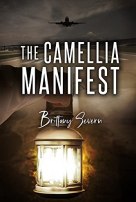 Before going on to hire an editor, most authors use beta-readers. How do you recruit your beta-readers, and choose an editor? Are you lucky enough to have loving family members who can read and comment on your novel?
  I loved the way the author seamlessly incorporated elements of an unreliable narrator into the main character. I think this novel could have been even better if – wait for it – it had multiple perspectives. The protagonist being a psychiatrist was pretty illuminating, but I think that a little more insight into the twisted psyche of the killer could have been interesting.
 An Interview with JV Hilliard, author of The Last Keeper
 I used to find myself buying books in only one genre (fantasy) before I started writing this blog. What is your favourite genre, and have your tastes changed over time?
 I requested this novel because I always enjoy memoirs of nurses and health professionals in general (eg.
 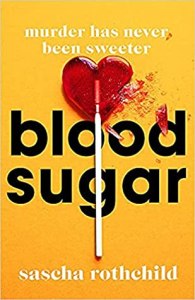 This book unfolds slowly and juicily in a way that you can’t help think the same way as Ruby about each of the deaths. She’s so smart, and so not a serial killer! It’s very difficult for me to write a review, because I don’t want to spoil anything. You’ll be happy to know that the blurb doesn’t really give much away, so you will be guessing along with the police.
 This book was pretty mind-blowing. I found myself connecting with Emma perhaps even a little too closely. The way that she approaches storytelling is just like her personality – powerful and confusing and detailed all at the same time. I couldn’t read this all in one go, I needed to take my time and sip it in small gulps to give myself enough time to really think about the implications of the work.
 An Interview with Kim Hays, author of Pesticide
 Before going on to hire an editor, most authors use beta-readers. How do you recruit your beta-readers, and choose an editor? Are you lucky enough to have loving family members who can read and comment on your novel?
 I usually write my own little blurb about a novel, but this one was so bland and boring I struggled to review it. While I connected a little with the main character, ultimately I didn’t enjoy the book. I kept reading because I thought that things would get better! But they didn’t.