 A Guest Post with Jonathan Durham, author of Winterset Hollow.
I’m so excited to be bringing you a guest post today from Jonathan! He’s been kind enough to write us a really detailed piece on “Building a Smaller Universe”. Take it away!
When most people talk about the concept of “universe building” as it relates to stories, the conversation usually focuses around large-scale narratives that deal with completely alternate realities—books or films that have almost literally built their own universes like Star Wars or Lord of the Rings or Game of Thrones. But what about smaller, more contained stories? They most certainly have their own universes too, so why don’t we ever talk about how they’re built? Why don’t we ever discuss the finer points of making them feel real and tangible and like they could actually exist? Well, as luck would have it, I happen to deal in stories of a less…shall we say…grand scope…so I figured I’d take a moment to share some of my thoughts on the subject in the hopes that it might be of some aid to some of you out there who share the same proclivity.
The universe of your story is always important…and it doesn’t really matter if you’re inventing a galaxy that doesn’t exist or a town that doesn’t exist. It doesn’t even matter if you’re not really inventing anything at all, you still need to paint a picture that feels complete and accurate within your story’s logic…and you need that picture to be a framework that allows your narrative to thrive. So, how do you fill that canvas when you don’t have a big story to work with? How to make that portrait feel real and interesting when you have a limited cast of characters and a limited list of locations and even a limited period of time? Well, in my experience, it’s all about thinking in different literary dimensions.
You may not have space…but you always have time. What I mean by that is that there’s never any limits on history, and history can be an extremely powerful force when it comes to telling a story. Successes, failures, traumas, love, loss, abuse, childhood, adolescence, first times, last times—think about all of the pieces of a character’s history that have been stitched together to make them who they are, and ask yourself whether or not investigating them within your story would help to build your universe. Think about the footprints of the past. Think about the specter of what’s come before. Think about the residue of the history of the story that you’re telling…and think about how you can use those things as mortar to your bricks.
History has always been a huge part of my writing. It’s been so integral, in fact, that almost everything I write features a dead character that plays a major role in the lives of the living. And if you think about it, those that have passed play a part in our lives long after they’ve left us—our parents, teachers, relatives, lovers, children—their footprints don’t disappear when they take their last breath. In fact, they continue to help define who we are long after their departures, so wouldn’t it help a piece of fiction to feel a little more real if it featured the same mechanic? History defines our present in the real world, so for my money, it should act no different in the literary world.
If you can’t build outward, build inward. Get introspective. There’s a whole universe between each of your character’s’ ears, too, and sometimes the exploration of those spaces in just as interesting, if not more so, that the exploration of the space that surrounds their ears. I mean, you could spend your whole life writing about a single person’s mind and never run out of things to say…it’s literally a limitless framework that contains limitless stories…so if it makes your narrative stronger, don’t be afraid to dig down when there’s no room to go up. If there’s not a whole lot of room to talk about where characters are going or what they’re doing or even what they’re saying…try talking about what they’re feeling and see if it doesn’t help to bring a little balance to your tale.
And last but certainly not least, find the authenticity in little moments instead of relying on big-picture believability. Large-scale stories often feel believable because their large-scale connective tissue feels believable—the social structures and world functionalities and languages and that sort of thing, but small-scale stories don’t have those frameworks, and so you need to be doubly sure that the little moments feel real. You need to double down on the attention that you pay to conversations and reactions and voicing and emotions, because those things are your connective tissue…and they need to be strong.
There’s no right way to tell a story…and there’s no ‘best’ size for a story’s universe…but you can make even the most contained narrative feel just as grand as the most epic fantasy ever written as long you paint that portrait with care, and as long as you understand that the journey isn’t necessarily shorter, it’s just drawn along different roads. And remember, whether your tale takes place across a galaxy, a country, a city, a town, or even just a room…you’re always always always building a universe.
About the Author
 Jonathan Edward Durham was born near Philadelphia in one of many satellite rust-belt communities where he read voraciously throughout his youth. After attending William & Mary, where he received a degree in neuroscience, Jonathan waded into the professional world before deciding he was better suited for more artistic pursuits.
He now lives with his partner in California where he writes to bring a unique voice to the space between the timeless wonder of his favorite childhood stories and the pop sensibilities of his adolescent literary indulgences. His debut novel, Winterset Hollow, an elevated contemporary fantasy with a dark twist, is mined from that same vein and is currently available everywhere. You can find it at all of these links:


 An Interview with Alex Robins, author of The Broken Heart of Arelium
 For a more unconventional answer, my second favourite is Silvara, a silver dragon in Weis & Hickman’s Dragons of Autumn Twilight. Silvara’s tragic romance with Gilthanas is truly heart-breaking and it was probably the first time I realised that fantasy novels could tell character-focussed stories that are just as deep and meaningful as any other genre.
 I thoroughly enjoyed the novel approach to World War II history in a way that made it approachable and interesting to me. For anyone who has an interest in fashion this book is going to be a great read. The author clearly had favourites! The key two women presented in a favourable light were Hanyu, who she presents as fearless and spunky, and Marta, who is compassionate for her team.
 The novel opens on Audrey, a wartime widow who is trying to make ends meet for her three young sons and literally keep a solid roof over her head. The author then pivots to her haughty sister, Gwendoline – and the reader suddenly feels berefit and unsatified (and perhaps even a little cheated). How dare Gwendoline make things hard for her sister? How dare she keep the young maid Nell on her toes from dawn past dusk? Yet as the novel progresses we start to see the side of each woman, and I honestly couldn’t decide who I wanted to win the competition!
 I seem to have a lot of complicated thoughts and feelings prompted by this book! It was a spot of lighthearted reading in my day that I knocked over in a couple of hours. It’s prime time to give this book as a gift for Christmas – anyone who loves animals is going to appreciate it as a thoughtful present. In my opinion, it’s not a reread, but it is worth a read.
 I was disappointed in this novel. There were too many characters, and not enough depth for each one. I wanted to know more about Helga’s story. I wanted to know less about Galen and more about the “original three” characters of Brocc, Liobhan and Dau. Things seemed to take forever, and then I just wasn’t satisfied with the ending.
 A Guest Post from Jeff Evans, author of the middle-grade fantasy series ‘What Magic is Not’.
 Evans: I’m honored today to interview Professor Philonius Gnut, who teaches magic at the legendary school in the woods, deep in the Enchanted Forest. He’s a bit of a local legend: every rumor about him is more outlandish than the last, and he rarely leaves the woods, so booking him for this interview was not easy. (I had to promise him a few months off of work before the sequel.) But here he is—Hello, Professor! Thanks for joining me.
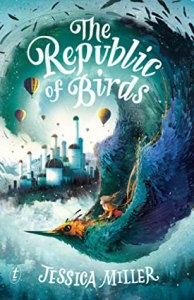 I read this novel as a pdf on my laptop, and it’s unsurprising that I didn’t enjoy it perhaps as much as I might have. I’d received back in 2020 to review, but I just couldn’t bring myself to read it. I sped through it pretty quickly as it had very little substance and was quite predictable to boot.
 I didn’t read this when it was first released because it arrived as a PDF. Thus it’s taken me two years to read it! While it was a nice enough story, and had some important implications for writing, I found myself mainly frustrated and left unfulfilled by the novel.
 This was a sneaky reread just after moving house – the book ended up at the top of a box and so it called to me to read it. Oops? But then I discovered that I hadn’t reviewed it, so I hadn’t really gotten away with anything.