The Girl in the Green Dress
Jeni Haynes & George Blair-West
“An unforgettable memoir from a woman who refused to be silenced. Jeni Haynes is an inspiration and her bravery and determination to live shows how MPD or DID saved her life. It is a powerful reminder of the resilience of the human spirit. ‘I didn’t know that you’re only supposed to have one personality. I didn’t realise that having lots of voices in your head was abnormal. But you are protecting yourself. You are protecting your soul, and that’s what I did.‘”
 Normally I think of myself as being quite iron-stomached. This book though proved that there’s some things that I simply can’t read. I appreciated the authors’ foresight and use of stars to tell me where I could skip a section if I wasn’t feeling strong enough. I also needed to put the book down at times and reassure myself that I wasn’t in that situation and that Jeni has made it largely to the other side.
What the true horror of this situation explores is a system that doesn’t teach children how to verbalise abuse, and a system where victim blaming is common. It makes me so angry against the Church and other organisations that just cover up sexual abuse (as partially exposed in Do as I Say). We need to do better. I don’t know how, but one way I’m going to do my part is to telling people to read this book.
We fostercare and sometimes host children who display ‘sexualised behaviours’. We’re told how to provide trauma based care, but I’ve never really understood what that practically meant. Having reading this book, I feel even more strongly that it’s so important to not be surprised or judgemental. These kids don’t necessarily have the words to express how they have been abused, but it’s so important for them to talk to someone who cares. I particulately liked that Dr George gave a list of resources for people who have Dissociative Identity Disorder / Multiple Personality Disorder. These come about as a result of horrific childhood abuse – and you need specialist training to help them.
It’s not just about surviving – Jeni’s mind made it possible to do that. The problem is actually thriving after abuse, and that’s where the treatment by a professional comes in. I had heard of Eye Movement Desensitization and Reprocessing (EMDR) before this, but didn’t really have an understanding of how useful it could be. Dr Blair-West teachs us in the medical interludes how this can be used to process traumatic memories.
This book is not easy reading, but I think that it’s essential reading. It gives insight into sexual, domestic and emotional abuse in children and the deficits in the justice system in Australia. We still have a long way to go before the system is better – very recently the Grace Tame #metoo movement happened. The laws are still protecting predators and putting the emphasis on victims being the problem – they have to prove that they are telling the truth. It’s disgusting, and it needs to change.
Hachette | 31 August 2022 | AU$32.99 | paperback


 The title of this book is misleading. It suggests that Dr Kay literally ran out of patients, and mislead me into believing that this book was going to tell me how it happened! Instead, it’s a chronocle of sorts about his life after leaving medicine with a few bits of past-medical scenarios thrown in. I found it unsurprising that the medical system in the UK is just as broken for training doctors as Australia!
 I picked up this book as an audiobook to listen to in the car. I didn’t get to it for a while as I had some other books to listen to first. By the time I got up to it I didn’t remember the synopsis of what it was about and had no expectations. As soon as I started listening, I loved it straight away and couldn’t stop listening! The whole book is structured like a memoir of the story of the authors life. I don’t normally like memoirs but this book was amazing. The story was told really well and kept you listening for more.
 How can someone so bright, be so dumb? If you are smart enough to get into medical school, surely you are smart enough to realise that military retaliation isn’t actually a bright idea most of the time. I understand the incredible and exciting challenge that you need to undertake to get into the special forces, but at the same time uh, isn’t creating long term medical problems like a bung knee a problem? It seems like a bit of a boys’ club, and that was always going to put my back up.
 I didn’t really expect to enjoy this book, but Dr Palipana brings a hint of humour into everything. You’d think reading a book about someone who lost almost all his physical abilities would be quite depressing. Instead, this book is a tribute to the author’s resiliance and persistance. To some extent, it also exposes some of the negative aspects of living across different countries and having family that you aren’t sure how to work with.
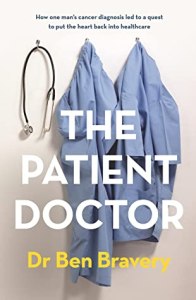 Hmm, this was an interesting book, but not an outstanding one. While it was interesting to see the way that Ben-as-a-patient affected Ben-as-a-medical-student, it wasn’t anything particularly new to me. I also already had some pretty in-depth knowledge about how broken the medical system is in Australia.
 Nurses work bloody hard. Every novel, every book I read, I know that nurses work very hard for sometimes very little reward. My mother was a nurse in aged care and I understood how hard it was for her to deal with patients dying every shift. For Anna to be able to keep her head above water and to keep working as a midwife even with all the avoidable deaths is amazing all by itself.
 I requested this novel because I always enjoy memoirs of nurses and health professionals in general (eg.
  This book was pretty mind-blowing. I found myself connecting with Emma perhaps even a little too closely. The way that she approaches storytelling is just like her personality – powerful and confusing and detailed all at the same time. I couldn’t read this all in one go, I needed to take my time and sip it in small gulps to give myself enough time to really think about the implications of the work.