Love & Autism
Kay Kerr
“‘Love has always intrigued me, in part because I have carried for a long time a feeling that I am doing love wrong.’ Through the intimate writing of critically-acclaimed autistic author Kay Kerr, Love & Autism presents an uplifting celebration of neurodivergent love, the search for it and a deeper look into the lives of autistic Australians.”
 What’s unique about this book? It has multiple, nuanced perspectives of people with autism in Australia. What are the strengths and weaknesses of autistic people when it comes to love? It turns out – a lot of things. The most important part for me was how each of these people learnt to love themselves, even despite or because of loving others. It’s not just romantic love, it’s also love for a family and a friend. Love is diverse, just as autism is diverse.
If you don’t identify as autistic but perhaps have autistic tendencies this may be a confronting read. The author states that it’s actually quite rude to say that ‘you’re on the spectrum’ if you aren’t actually diagnosed, but that doesn’t mean that it’s wrong for some of what you read about to resonate with you.
I never did finish reading ‘Please Don’t Hug Me’ (I received an ARC eBook) because I hate eBooks. … I have to admit that I read Love & Autism as an ebook! I was scrolling through my Borrow Box from my local library and it turns out that it’s diversity month or something. This caused me to stumble onto this, and a couple of other non-fiction in this genre.
I’m really enjoying non-fiction at the moment, so expect a few more reviews from me. It’s strange because I’ve always been a fiction/fantasy reader because I’d rather not know about what bad things are happening around me in the real world. Maybe it’s time to strike a happy medium? I at least know that the ‘main character’ will survive if the author is alive!


 Is this allowed to be a memoir when its author is still so young? Prue packs a lot into these pages and I am keen to read more! This seems like part 1 of her career, and I can’t wait to read more. There’s plenty of variety in her stories and the opportunities that she’s taken up are mind-boggling in their differences. From letting her mom pick nursing (or teaching) as a career for her, Prue has thrived in the unique environments she’s found herself in.
 Sections of this book were haunting. The sheer number of atrocities that have occured under government rule and the ones that are still happening today is almost overwhelming. The people trying to identify their
  This book is very slow. It spends a good chunk of the start of the book “rethinking leadership” in a modern way. Although I agree that some leaders do need to rethink how they lead, the people that have picked up this book would already agree with the title and modern leadership and do not need to be convinced.
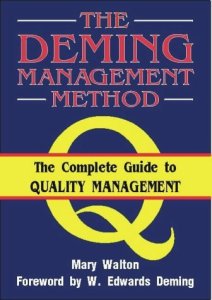 This book is an interesting read, but not for everyone. It is clearly an older book that is written in an older manner, but it is still applicable and not completely outdated. It’s a little dense and takes a while to get into it. I felt that the long introduction / background on Dr Deming was very interesting.
 This is a pretty good book but not as riveting as his others. Like Lencioni’s other books, the majority of the book is told as a fable. You get invested in the characters and it’s realistic and relatable. For this particular book we see two CEOs at competing firms. You can’t help but feel sorry for them both and want them both to succeed despite them being direct competitors.
 This is the first Holocaust book I have read that has a gypsy perspective at the heart of it. I think it is unfair however that it’s the ‘forgotten’ Holocaust, because it seems as if it was very similar to Jewish perspectives. The Holocaust was attrocious for any marginalised group in Nazi Germany, and I would hope people hadn’t forgotten about others who suffered.
 This book is exactly as it says, a step by step guide on how to turn good ideas into not just great but killer ideas! The author breaks down the steps into each chapter and gives you lots of business examples to relate to the steps. It’s very well written and kept me wanting to read more! There are also in real life practical questions to ask yourself at the end of each chapter to help get you started on coming up with your ideas. I always love great take-aways from books such as this, as well as a dot point summary at the end of each chapter that you can refer back to without needing to re-read the whole thing.
 This is not a business type book that I normally read, but it was really interesting! The introduction is a little long and slow – mostly because it has a lot of sports which I’m not interested in. Once the book starts and gets into it though, the data is really interesting. It’s so hard to trust any data that’s on the internet, so it’s nice to have it in a book and a well presented format that is really accessible for everyone (and hopefully reliable!).
 The book I reviewed is the new version that includes references to COVID-19 and the thinking of some people around that (so this cover isn’t quite right).