Careering
Daisy Buchanan
Harri has dreamed of taking the helm of Panache and has hustled hard to get there. The problem is that she’s been passed over, and now is expected to run a new magazine that seems likely to fail. Imogen has finally moved from unpaid intern to writer thanks to her sexually explicit blog. But can the two women make it work? Or are things careering off the rails…
 I like the play-on-words in the title, very smick! Unfortunately, that was where my enjoyment ended. I don’t understand this novel. It’s going to appeal to a super specific audience, one that feels like the fashion industry is where they should be. Specifically, the magazine/printed word fashion scene. If you enjoyed The Devil Wears Prada or Ugly Betty, it’s a fair bet (haha) you’ll enjoy this novel more than me.
The blurb made it seem like we were going to get equal knowledge about both women, and be able to draw parallels. Unfortunately, the only one I picked up (besides that they both had to work really hard for their jobs) as that they had sex with Sam Strong.
The text at times seems quite ‘dirty’ and sex-ridden. I didn’t actually see where it added anything to the plot. I felt like Imogen (apart from the walrus confrontation) was benefitting somewhat equally with the ‘relationship’ with Sam. Come on! She got food more regularly! But is it abuse? I’m not sure.
I really don’t consider this book is doing justice to “stage a rebellion the only way they know how”. I didn’t really see any rebellion – they just seem to keep going where they are. Also, even if they do exit the rest of the fashion rat race, do they know how many startups are doomed, and how few get through the first two years?
This gets two stars since I finished it, but it left me feeling wrung-out and not very satisfied by the characters or the plot. If you like fashion, give it a go. If you don’t, maybe give it a miss.

Hachette | 8th March 2022| AU$32.99 | paperback


 This novel was breathtaking. I couldn’t bare to put it down – I needed to read right to the very (bitter) end. Several hours later, and I’m still thinking about Jamie and Andrew and the future. I sank deeply into the universe and felt the dirty sneakers on their feet as my own. I couldn’t decide which character I liked more, which is quite rare for me with a dual narrator (usually I like the first one introduced the best).
 Another reviewer has put this really well – ‘all the characters are morons’! Oh! It’s so true! They could all go die, I couldn’t have cared less about the outcome.
 Growing Up in Flames is theoretically a great young adult novel about the impact of potential bushfires on teenagers growing up in remote and regional areas of Australia. Unfortunately, although the main characters seemed to fear fire, it seemed to be used as a plot point that didn’t actually have a reasonable or even legally appropriate ending.
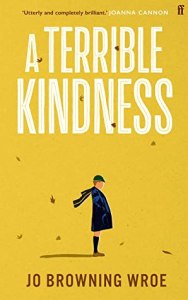 A Terrible Kindness was a bit of an odd book in the way that it jumped forwards and backwards through time. What I was expecting was a book that had a bit more about the intricacies of embalming and looking after body after it has died. From the back cover, I thought that I was going to learn about different techniques that could be particularly used in an example where the bodies were quite degraded. Also, a direct discussion of about how traumatic it can be to embalm a child.
 Wow. This is a heartbreaking and heartwarming account of one woman’s live destroying disease and how she got through and lives with her condition. I could hardly believe that doctors had gotten it so wrong, and the huge impact of a clinical trial gone wrong on the rest of her life. Remember that you don’t have an obligation to participate in something, but you do have an obligation to make the most of what you have. This is something the author realised over time, thankfully not too late.
 I have been ‘enjoying’ a number of non-fiction novels lately about the Holocaust. I say ‘enjoying’, but really they are quite sad reads due to the devastating loss of life as a result of Hitler’s anti-Semitic policies. I found myself horrified and yet not surprised at the level of brutality exhibited by the Nazi’s. It’s one thing to have a critical idea of World War II (as I’ve said before, my history knowledge is poor) and another to really experience it as these writers did.
 This book really dives into all the insights of habits and leaves pretty much nothing out. It gives an in depth understanding of how habits are formed and how to start new habits. My only downside was that it had a lot of tips to create new habits but not a lot on changing old ones.
 I listened to this as an audio book. It was just average. It wasn’t exactly what I thought it would be. I expected a lot more modern tips and tricks such as working from home apps, software, and things to assist in the modern age. I guess the author did have outsourcing in there in a general form which was nice. But instead, pretty much all of the tips and insights have been discussed before and I didn’t get anything new from it. For example, one point was the the urgent/important quadrants of using your time.