The School that Escaped the Nazis
Deborah Cadbury
“The extraordinary true story of a courageous school principal who saw the dangers of Nazi Germany and took drastic steps to save those in harm’s way. In 1933, the same year Hitler came to power, schoolteacher Anna Essinger saved her small, progressive school from Nazi Germany. Anna had read Mein Kampf and knew the terrible danger that Hitler’s hate-fueled ideologies posed to her pupils, so she hatched a courageous and daring plan: to smuggle her school to the safety of England.”
 This book is again a tribute to all of the children and their families murdered during the rise and fall of Nazi Germany. I found myself again horrified at the sheer number of children murdered in the Holocaust. This book flips between the school as it is established in Britain, and then into its students’ origins as well. There are some children who survived largely in the ‘wild’ of Germany, and we also see their perspective.
This is not nearly as confronting as Always Remember your Name, thankfully. It’s an interesting read, and I’d recommend it to anyone interested in alternative schooling perspectives as well as those who would like to further broaden their understanding of the traumas visited on children during the wars.
It is becoming more and more obvious and acknowledged in society today that children often suffer from trauma that has repercussions throughout their lifetimes – and which may never be resolved. It is the same for the adults who managed to survive and that may never be able to recover. This can also be seen in the novel The Little Wartime Library, which briefly narrates what one of the incarcerated adults looked like after the freeing of POWs.
Reading this book was heavy going at times and it took me a number of sittings to digest it. I’m normally not interested in history, but I’m not sure that can be said of me any more! I have read quite a few books about the Holocaust now, including Always Remember Your Name, The Dressmakers of Auschwitz and The Keeper of Miracles. I have yet another waiting on my bedside table for me to read.
Hachette | 10 May 2022 | AU$32.99 | paperback


 I liked Duke Valdemar and I didn’t have any objections to the second perspective of his sister-in-law. The opening pages make it seem as if Delia will have a big role to play, but as yet, she hasn’t achieved anything major during the novel. The Duke on the other hand has his nose poked in everywhere, and is devious to boot! His compassion and humility could read as trite, but his approach to life is always consistent.
 Let’s hear it for a middle-aged, moderately attractive, highly skilled scientist. One of the best parts about these novels is that Tempe is highly flawed and quite relatable. I love the science that is inherent in everything she does, and I have a morbid interest in death in all its forms!
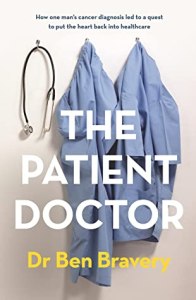 Hmm, this was an interesting book, but not an outstanding one. While it was interesting to see the way that Ben-as-a-patient affected Ben-as-a-medical-student, it wasn’t anything particularly new to me. I also already had some pretty in-depth knowledge about how broken the medical system is in Australia.
 This novel forced me to read it. I couldn’t put it down and it thoroughly distracted me from real life. I saw it while idlily looking for an audiobook to listen to on my phone. I HATE reading on my phone, but somehow I got sucked in. Then I had all of the feelings that kept me reading it.
 Q&A with Lynne Christensen, author of Aunt Edwina’s Fabulous Wishes
 Your cover is so colorful! Why did you put a 92-year-old woman on the front?
 Once this book arrived, I wasn’t sure if I would be interested in a series of academic essays about ‘rogues’. That being said, I actually found myself quite eagerly diving into the stories, and it helped that the first was about wine fraud! After each one I needed to take a breather to really absorb what I had read and I ended up reading the book over two major sittings. By the end, my brain was feeling a bit overused and I would have said that the last 40% was a slog. I’m not certain that the last story really covered a ‘rogue’ (Anthony Bourdain – more of a sad ending than anything else) but none-the-less it was a good point to end the book.
 This is another novel I sort of gulped down on a plane trip. I polished it off between Melbourne and Perth, so I know it was around a 2-3 hour read for me. Something nice and light, fluffy and not too much hard brain work required! Let’s just say that I could see the ending coming by a mile off, but still kept reading and still was a little surprised by the end!
 Nurses work bloody hard. Every novel, every book I read, I know that nurses work very hard for sometimes very little reward. My mother was a nurse in aged care and I understood how hard it was for her to deal with patients dying every shift. For Anna to be able to keep her head above water and to keep working as a midwife even with all the avoidable deaths is amazing all by itself.
 If anyone could give the prevailing emotion of this novel, you’d think that it would be hope. I felt however that this novel was desperately sad, because although there is hope for the future I don’t think that the change we see in the men is necessarily sustainable. It takes courage to face what you are, but it also takes money and time – and I worry that there isn’t enough of either for our protagonist.