Guest Post: Novels about Mental Illness

7 Novels About Mental Illness
Stephen Bitsoli

Today I have a guest post from Stephen Bitsoli to bring a selection of novels that depict humans who struggle with mental health issues. It’s a topic close to my heart, so I’m truly delighted to have him here. I confess that I haven’t read any of these, so my to-be-read pile just got even longer!

Mental health issues, from major depressive disorder to chronic substance abuse, are part of the human condition, and so perfect fodder for fiction. Not every author who tackles the topic is up to the task, however. 

Authors with a first-hand acquaintance of the subject, among themselves, family members, or loved ones tend to speak to mental health disorders with a realism that just can’t be beaten. 

If you’re interested in some of the best fictional explorations of mental illness, these seven classic-to-recent novels should be on your reading pile.

One Flew Over the Cuckoo’s Nest by Ken Kesey (1962). One Flew Over the Cuckoo’s Nest is a 1962 novel, perhaps best-known for its wildly successful 1963 stage and 1975 film adaptations, but the original novel stands on its own. Set in a psychiatric ward, run by the tyrannical and possibly psychopathic “Big Nurse” Ratched, it depicts her conflict with a disruptive new patient Randle Patrick McMurphy, as narrated by a fellow inmate, the schizophrenic “Chief” Bromden. McMurphy has faked mental illness (though some analysts have diagnosed him as having antisocial personality disorder) to avoid hard-time at a prison work camp for battery. Inspired by Kesey’s experience working at the psych ward of a veterans hospital in the 1950s, the novel focuses on the mental health care system. So-called medical “treatments” then included electroconvulsive (electroshock) therapy (ECT) and lobotomy.

The Bell Jar by Sylvia Plath (1963). The Bell Jar is a semi-autobiographical account of a young woman growing up in the 1950s and dealing with societal expectations and mental illness. The story follows Esther Greenwood, a young woman who struggles to feel excited about anything, including winning a prestigious internship at a New York City fashion magazine. She has a mental breakdown and fixates on death and suicide. The novel’s motif of a bell jar “suffocating” Esther’s world parallels Plath’s struggles with depression, suicidal ideation, and what may have been bipolar II disorder. It also describes psychiatric treatments of the time such as insulin shock therapy and ECT.

Beloved by Toni Morrison (1987). Beloved tells the story of Sethe, a former slave now living in freedom in Ohio after the Civil War. She is still mourning the death of her baby—she may have postpartum depression in addition to post-traumatic stress disorder (PTSD) from her enslavement—who had no name but “Beloved.”  Sethe believes her baby’s spirit is haunting her. She is also tormented by the memories of life on the plantation. The theme of PTSD is similarly explored in another character, Paul D, who relives his physical and sexual abuse. Inspired by the true story of Margaret Garner, Beloved is a brutal account of the atrocities of slavery and the effect of trauma on mental health that everyone should read at least once in their lifetime.

She’s Come Undone by Wally Lamb (1992). She’s Come Undone follows the story of Dolores Price, who, as a teenager, suffers emotional neglect due to her mother’s postpartum depression and her parents’ divorce. Later she binge eats due to her depression (or possibly cyclothymic disorder) until morbidly obese, experiences PTSD following a rape, and ends up in a wellness facility after a suicide attempt. After her release, a bad marriage, and more tragedy, she finds peace in her late-30s and accepts that her life is both good and enough. Lamb’s first published novel, an early Oprah Winfrey Book Club selection, has been translated into 18 languages. It’s an exploration of trauma, hope, and radical self-acceptance.

It’s Kind of a Funny Story by Ned Vizzini (2007). It’s Kind of a Funny Story follows the story of Craig Gilner, a teenager who is filled with ambition. After he’s admitted to a prestigious school, Craig finds himself buckling under the pressure from his teachers and parents. This eventually leads to disordered eating, depression, and thoughts of suicide. Craig starts taking medication but throws it away when he believes himself to be “cured”, causing a breakdown that puts him in a psychiatric hospital. The novel, based on author Ned Vizzini’s experiences in a psych ward, deals with themes of suicide, mental health care, and how society views those with psychological issues.

Wintergirls by Laurie Halse Anderson (2009). Wintergirls is the story of Lia, a teenage girl struggling with survivor’s guilt after the death of her best friend Cassie. In the wake of Cassie’s death, Lia develops obsessive behaviors, including anorexia and cutting. She feels isolated from everyone and like she is unlikely to get help. As her self-destructive behaviors grow worse, Lia is haunted more insistently by Cassie’s spirit. While some critics voiced worries that Wintergirls could encourage teens to engage in disordered eating, the 2009 novel largely received praise for its gritty exploration of self-harm, guilt, and hope.

Turtles All the Way Down by John Green (2017). John Green’s novel Turtles All the Way Down tells the story of Aza, a 16-year-old girl struggling with loss, anxiety, and obsessive-compulsive disorder. These manifest in spiraling thoughts, safety rituals, health anxiety, and feelings of depression and isolation. Anyone who has suffered from similar mental health struggles will identify with Aza as she finds a new idea to fixate on: finding the missing billionaire Russell Pickett, the father of her classmate Davis, with who she begins a relationship. All the while, she fears that her mental health struggles will make it impossible for her to have a normal life.

Sources

If you’d like to read more by Stephen Bitsoli, here’s the link to his website – Sunshine Behavioral Health

Spotlight with Iris Novak, author of An Independent Woman in Yugoslavia

Spotlight with Iris Novak, author of An Independent Woman in Yugoslavia

An Independent Woman in Yugoslavia is the true story of a woman named Iris who was born as a poor and frightened country girl in the ex-Yugoslavia. However she felt that she could achieve what she was determined to and had enormous energy that helped her to follow her many life goals.

Living in a country that was situated between the Western and Eastern Europe in the second half of the twentieth century offered her challenges from both different geopolitical and cultural worlds. Her parents came from two opposite sides: her father from a Communist environment and her mother from a poor Catholic family. They had quite different characters: her father was violent and revengeful while her mother was a happy and optimistic person. When Iris became a teenager, her teacher tried to put her on the list of perspective young Communists but Iris managed to evade. Iris refused invitations to the Communist Party also later when she got employed although she knew that non-members of the Communist Party did not have almost any opportunity to achieve leading positions. She was a rather critical believer but always remained Catholic and also decided for religious education of her children.

Her family and her neighbours found her a rather simple girl but as soon as she entered school she was always at the top of the class. She managed to successfully finish her grammar school, the university and PhD. Her studies helped her find several good jobs in quite different areas and in different institutions: a large company dealing with international business, the Slovenian National and University Library, the largest School of foreign languages and finally open her own business. Iris was successful in in international business, in the library and in the school for foreign languages; she left her privileged position and good salary and established her own firm. She was aware that this meant living in poverty again but still believed that she would one day be successful again.

Iris’s family brought about a number of distinctive situations as well. She was living in poverty and in constant fear till her mother divorced her violent husband. She was a teenager when her family built their own house but it did not make them happy. Iris, her mother and her brother had to leave their house without everything. When she married, she thought that she finally found a man whom she would love till the end of her life. However, she soon discovered that she had to accept her mother-in-law as an essential part of her married life and it was even worse when she had to start a struggle against her own husband to win some respect. On the other hand her mother remained her support till the end of her life and her children were a blessing.

Iris spent so many amazing events in her life: absolute love between a mother and a daughter, always being among the best students, falling in love with a young intellectual and changing in a beauty, finding a husband whom she loved, always getting good jobs and increasing her education, and feeling that death did not break the ties with her beloved ones. She always found it a miracle that she could join three children and a career and that she became a deeply religious person although she was living and working in a Communist country.

It was unusual life in which there was no routine. Iris had to struggle and adapt herself to always new positions and new roles that were placed in front of her. However, she had a lot of energy and a strong will to overcome troubles in her family life, in education and in business. Iris is an energetic character who used all her strength to achieve what she wanted and many women will find her as a model to follow in one or another way.

About the Author

The author writes under the pseudonym Iris Novak. She was born in the second half of the twentieth century in Slovenia, the northern part of the then Yugoslavia. She graduated from English and German, acquired her MA in Management and PhD in Librarianship. She worked in the international business, in librarianship, was director of a school for foreign languages and finally established her own business: employment agency and a college. The author lives in Slovenia, is married and has three children.

An Interview with Brittany Severn

An Interview with Brittany Severn, author of The Camellia Manifest

Brittany Severn is a writer from Fort Riley, Kansas. She currently lives in Alabama with two rescue dogs, every season of The Golden Girls, and a tortoise named Phil.

What is your favourite dragon in literature?

I know a lot of people are going to pinch me for not saying Smaug because I was so obsessed with Tolkien growing up (LOTR Trivial Pursuit grand champ, here), but I’m going with Saphira from Eragon. She was so damn cool.

Everyone has a ‘first novel’, even if many of them are a rough draft relegated to the bottom and back of your desk drawer (or your external hard drive!). Have you been able to reshape yours, or have you abandoned it for good?

Oh, it was abandoned for sure. I tinkered with it for years, but it just didn’t work out. And that’s okay. Not everything you write needs to be published. I learned from it, if anything.

Over the years, what would you say has improved significantly in your writing?

Practice, but also, reading. 100%. You get to know dialogue and characters, world building, what works for fan bases and what doesn’t. Reading definitely makes for a better writer.

Some authors are able to pump out a novel a year and still be filled with inspiration. Is this the case for you, or do you like to let an idea percolate for a couple of years in order to get a beautiful novel?

I’d love to be the kind that can pump out novels faster. I published four last year and got burnt out. One to two is my goal, but it’s slow going because I really want to get these stories and characters right.

I have heard of writers that could only write in one place – then that cafe closed down and they could no longer write! Where do you find yourself writing most often, and on what medium (pen/paper or digital)?

If I’m out and about, I always use my Notes app for ideas, one liners, etc. But when I’m home, I write on my laptop on the couch. It’s the most comfortable spot.
Before going on to hire an editor, most authors use beta-readers. How do you recruit your beta-readers, and choose an editor? Are you lucky enough to have loving family members who can read and comment on your novel?

My parents always read my stuff first. Except for the erotica – I put that out and didn’t say anything to them because I can’t imagine them reading it and then being able to look me in the eye. But my parents and some friends do a read through and give their input. Once I have a more polished draft I have a couple of beta readers it’ll go through. I fix what they find grammar-wise, and then I usually do another run through on my own. I haven’t had anything of mine edited by anyone but me (not the best thing, I know), but I look forward to someone else doing that for me one day.

I walk past bookshops and am drawn in by the smell of the books – ebooks simply don’t have the same attraction for me. Does this happen to you, and do you have a favourite bookshop? Or perhaps you are an e-reader fan… where do you source most of your material from?

I always use the local library. I’m not a huge fan of eBooks and I don’t own an e-reader. It’s just not the same. I like to hold a physical copy. I rarely buy books, which surprises a lot of people, but when I do it’s usually from a used bookstore. Like you mentioned, that smell just draws you in. We have some here in Alabama that are nice, but I went to one in Charleston a few years ago and it was the best, complete with books from the floor to the ceiling, an archway of books, and wandering cats.

I used to find myself buying books in only one genre (fantasy) before I started writing this blog. What is your favourite genre, and have your tastes changed over time?

I think I’ll always be a YA reader. It’s my favorite genre. But I have gotten into more mystery/thriller lately, true crime, and other non-fiction books. I just finished Hallucinations by Oliver Sacks and it was fascinating.

Social media is a big thing, much to my disgust! I never have enough time myself to do what I feel is a good job. What do you do?

I am so bad at social media. Even my personal account goes months without a post. I post stories on Instagram a lot because they’re easy, short, and fun, but I don’t post as much as I should. It’s something I’m working on, but it’s definitely not my favorite thing. I can’t even remember the last time I updated my Facebook page. Anything marketing-wise is not very fun for me.

Answering interview questions can often take a long time! Tell me, are you ever tempted to recycle your answers from one to the next? 

I try not to, but I’m sure I do. It depends on the questions, really. I like out of the box questions. The weirder, the better. I feel like my tone should be more proper in interviews, deeper and with longer answers and probably less cursing and the word, ‘dude’, but it is what it is.

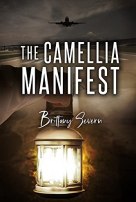
About The Camellia Manifest

Sisters Echo and Ava know about loss, but now they are about to lose everything…

Grieving the loss of their grandmother, Echo and Ava only have each other now. On the day of her funeral, catastrophe strikes as natural disasters begin to rip the Earth apart. The world is coming to an end, but there may be hope. Teaming up with some unlikely allies, including an apocalypse obsessed radio host, the sisters seek safety. With the world in chaos, it won’t be an easy journey and they are in for a hell of a ride. As they reach their destination, a single flight headed to safety, the sisters discover that not everyone is on their side and they will have to fight for their survival. Can they make it to the plane? Or will they be left to die on the ground?
Review: Kassandra Montag – Those Who Return

Those Who Return
Kassandra Montag

Lore is taking time out after her traumatic exit from the FBI. There is no better place than the Hatchery House – an isolated, live-in psychiatric facility for mentally ill children and teens. Lore has her own demons to exorcise with her fellow resident psychiatrist – but everyone is keeping secrets. After a death, Lore finds herself questioning everything she’s learnt about her practice so far.

I loved the way the author seamlessly incorporated elements of an unreliable narrator into the main character. I think this novel could have been even better if – wait for it – it had multiple perspectives. The protagonist being a psychiatrist was pretty illuminating, but I think that a little more insight into the twisted psyche of the killer could have been interesting.

This book’s ending felt a little unfinished. It was very unclear where Lore ended up. I wasn’t ready to leave the story! I detested the narrative framing because I didn’t really care about that character. I was desperate to find out what Lore did next!

I’m giving this book 3 stars, because it was decent to read and did keep me reading – but the ending disappointed me. I’d recommend it for anyone who has an interest in psychology/psychiatry as a light read that nevertheless has a powerful message to share with the reader.

Hachette | 12th April 2022 | AU$32.99 | paperback

An Interview with JV Hilliard

An Interview with JV Hilliard, author of The Last Keeper

The Last Keeper is the first book in The Warminster Series. With gripping, epic action and heart-pounding adventure, you’ll love this new adventure series.

What is your favourite dragon in literature?

As unoriginal as it may be, I fell in love with Smaug as a child when I read The Hobbit by J.R.R Tolkien. Smaug was the classic dragon, and he set the scales (no pun intended) for the rest to be measured against in the epic fantasy genre.

However, in book three of my Warminster series, I introduce a new dragon which I may be partial too (no spoilers here).

Everyone has a ‘first novel’, even if many of them are a rough draft relegated to the bottom and back of your desk drawer (or your external harddrive!). Have you been able to reshape yours, or have you abandoned it for good?

I finally published the Last Keeper last December and that was the “first novel” that I started back in my college days. When COVID reared its ugly head, I was out of work for over a year, so I was able to steal a silver lining from it and dust off my old drafts and finally launch it.

Over the years, what would you say has improved significantly in your writing?

For my day job, I write speeches, legislation, policy papers and the like. When I started to write the Warminster series, I needed to flip the switch from non-fiction to fiction, so story related items like dialogue and pacing were an issue for me in the beginning. I am still getting better at it with each new novel, and I depend on my editors and beta readers to help where I may fall down.

Some authors are able to pump out a novel a year and still be filled with inspiration. Is this the case for you, or do you like to let an idea percolate for a couple of years in order to get a beautiful novel?

Now that I am writing every day, I don’t have a problem with story creation. I believe that since I’ve had some stories bottled up for so long, it’s more a firehose than a spigot for me. My first book took me a year to write, but my second (which is in editing now) I finished in six months. The third (which is about half completed) should be done in four months and released around the holidays. It feels good to release the creative energy that was penned up for so long.

I have heard of writers that could only write in one place – then that cafe closed down and they could no longer write! Where do you find yourself writing most often, and on what medium (pen/paper or digital)?

I do my planning with graph paper and a white board in my den, but all of my true writing is digital. I do find I can write anywhere, but I am more comfortable in my den, later at night or at a local bookstore/café nearby. Something about surrounding myself in my private library or sitting in a bookstore is motivating. Staring at the spines of books from some of the greats is motivation enough.

Before going on to hire an editor, most authors use beta-readers. How do you recruit your beta-readers, and choose an editor? Are you lucky enough to have loving family members who can read and comment on your novel?

I have secured my beta readers through lifelong friendships or from those I’ve played Dungeons & Dragons with over the years. They all understand and appreciate the genre and most write themselves in some capacity for their careers. But I did focus on finding a few editors that specialize in the Epic Fantasy genre to be helpful Sherpas. I believed this was necessary for a first-time author.

I walk past bookshops and am drawn in by the smell of the books – ebooks simply don’t have the same attraction for me. Does this happen to you, and do you have a favourite bookshop? Or perhaps you are an e-reader fan… where do you source most of your material from?

I L-O-V-E bookstores. I worked in one while still in high school and then worked at my university library when I was at college. I go to my local Barnes & Noble store to write during the week and then for pleasure on Saturday mornings (when I don’t do work—and just pick a book I will read that weekend).

While I appreciate the e-book, there’s nothing that can replace that hardback or paperback in your hands. I will admit however I do use audiobooks often when I travel and have downtime on planes or cars.

I used to find myself buying books in only one genre (fantasy) before I started writing this blog. What is your favourite genre, and have your tastes changed over time?

Fantasy is my favorite and that has never changed, but I do really enjoy Science Fiction and Horror, especially the gothic. I am hoping one day to write my own vampire novel.

Social media is a big thing, much to my disgust! I never have enough time myself to do what I feel is a good job. What do you do?

I forced myself to learn the process as it is necessary in this day and age. Readers use them as resources for discussions, referrals, reviews and groups to share books. And if you put in the work, it is “mostly” free (save for your own time) and global. In my first month of sales for The Last Keeper, I had readers buy my book and ask for signed copies from places like India, Serbia, Romania, Tasmania and the like. Without social media, I would have never reached them.

I manage my profiles myself, but I do have several people that help. In part, I have a day job that dominates my time an often I need someone to manage requests or respond to inquiries when I am away.

I spend about two hours a day on social media, including promotions, sales, newsletters, adding followers and researching what is working for other authors (and what is not). Using author groups have been helpful to learn best and worst practices.

Answering interview questions can often take a long time! Tell me, are you ever tempted to recycle your answers from one to the next?

It’s tempting, as sometimes you are asked the same questions, but I’ve learned that it’s best to just be original in each response. Canned responses read as if they were pre-programmed and that’s no way to connect with readers.

About J. V. Hilliard

Born of steel, fire and black wind, J.V. Hilliard was raised as a highlander in the foothills of a once-great mountain chain on the confluence of the three mighty rivers that forged his realm’s wealth and power for generations.

His father, a peasant twerg, toiled away in industries of honest labor and instilled in him a work ethic that would shape his destiny. His mother, a local healer, cared for his elders and his warrior uncle, who helped to raise him during his formative years. His genius brother, whose wizardly prowess allowed him to master the art of the abacus and his own quill, trained with him for battles on fields of green and sheets of ice.

Hilliard’s earliest education took place in his warrior uncle’s tower, where he learned his first words. His uncle helped him to learn the basics of life—and, most importantly, creative writing.

Hilliard’s training and education readied him to lift a quill that would scribe the tale of the realm of Warminster, filled with brave knights, harrowing adventure and legendary struggles. He lives in the city of silver cups, hypocycloids and golden triangles with his wife, a ranger of the diamond. They built their castle not far into the countryside, guarded by his own two horsehounds, Thor and MacLeod, and resides there to this day.

About The Last Keeper

A young boy’s prophetic visions.

Blind at birth, Daemus Alaric is blessed with the gift of prophetic Sight. Now, as a Keeper of the Forbidden, he must use his powers of the Sight to foil the plans of a fallen Keeper, Graytorris the Mad.

An elven Princess with a horrifying secret.

Princess Addilyn Elspeth travels from Eldwal, the magically hidden home of the Vermilion elves, to begin her life as a diplomat to the human capital of Castleshire. During her journey, she stumbles upon a mystical creature foretelling ill tidings.

A terrifying force of evil.

Daemus’ recurring nightmare vision threatens to catapult him into a terrifying struggle that will leave the fate of the Keepers—and the realm—hanging in the balance. Daemus and Princess Addilyn must set out to face the menace that threatens their very existence.

Will the entire realm fall to its knees?

The Last Keeper is the first book in The Warminster Series. With gripping, epic action and heart-pounding adventure, you’ll love this new adventure series.

Review: Keith Cox – A Caring Life

A Caring Life
What fifty years in nursing has taught me about humanity, compassion and community
Keith Cox

“As a nurse for nearly fifty years, Keith Cox provided expert care and comfort to countless people facing the unimaginable…Over the years, Keith has seen dramatic advances in medical treatment, as well as the limits of what medical intervention can achieve – which is why compassion and grace are his guiding principles, both on the ward and in his own life. A Caring Life is the inspirational story of a nursing trailblazer who has learnt firsthand the value of human connection and kindness, in challenging times and in everyday life – and the satisfaction of living a life of service and meaning.”

I requested this novel because I always enjoy memoirs of nurses and health professionals in general (eg. The Jungle Doctor). However, I had expected more stories about Keith’s patients, rather than about Keith himself. That’s not to say that this book wasn’t good, just that it was different to what I was expecting.

I was fascinated by the development of cancer treatments over the last 50-80 years and how what used to be a rapid death sentence has become longer years of living and even maybe complete remission for cancer sufferers. However, this is not true of all cancers, and there are still very rapid deaths.

At times this memoir was lighthearted, and at others it was heartbreaking and almost brought me to tears. Keith’s approach to patients and their families is something that I aim to channel in my own teaching. It’s never just about the content or the treatment, it should always be compassionate care that looks at a whole person rather than just one element of them.

Despite Keith being a relatively more religious man than many other Australians, this doesn’t come through in the novel – it’s mentioned, but never takes center stage. It seems as if the only important thing to come out is compassion and care – the book is named very appropriately. This book is worthy to be placed on any family bookshelf that has a nurse or cancer survivor in it.

Pan Macmillan | 26th April 2022 | AU$34.99 | paperback

Review: Sascha Rothchild – blood sugar

blood sugar
Sascha Rothchild

Ruby is facing a lineup of four photos – each one is of a person is dead, and she’s responsible for three of them. She doesn’t feel any guilt, so why should she be prosecuted? And she didn’t kill the one that she’s most likely to stand trial for…

This book unfolds slowly and juicily in a way that you can’t help think the same way as Ruby about each of the deaths. She’s so smart, and so not a serial killer! It’s very difficult for me to write a review, because I don’t want to spoil anything. You’ll be happy to know that the blurb doesn’t really give much away, so you will be guessing along with the police.

Look at that lovely jacket art. Provided that you’ve not read the summary on Goodreads (which gives waaayyy too much away) you’ll be like me – wondering why it’s called blood sugar. You won’t be disappointed. Ruby’s fragmented narrative is reliable yet skewed at the same time. The navel gazing she does is interesting, and left me thinking about whether anyone else has been getting away with murder in regular life! I’d have to think so.

There’s a bit of specific legalese here that some readers might be able to pick apart better than I. I was so attached to Ruby that I was too busy digesting her justifications to do anything except keep reading. The time perspective jumped around a bit, but I tolerated it quite well because I was entirely stuck into the story.

If you enjoy a thriller but hate jump scares and the feeling that the murderer might live next door, this novel is for you! The murders are all in the past, and so it feels perfectly ok to be reading this in the dark past your bedtime. I feel a strong need to share this novel with everyone! Go buy a copy, and then buy one for a friend so that you can both discuss it together. I’m giving it 5 stars, and when I’ve forgotten the plot enough I’ll read it again.

Hachette | 26th April 2022 | AU$32.99 | paperback

Review: Diagnosis Normal – Emma A Jane

Diagnosis Normal
Emma A Jane

“Combining brilliant storytelling with rigorous research, Diagnosis Normal is an incisive and darkly funny memoir from journalist turned academic Emma Jane. ‘I have three gears: glum melancholy, inappropriate outbursts, and extreme slapstick. On a good day, I can pass as normal but not for too many minutes. I’m what most people would regard as a hardened introvert . . . I like other people. I’m just not very good at them.’”

This book was pretty mind-blowing. I found myself connecting with Emma perhaps even a little too closely. The way that she approaches storytelling is just like her personality – powerful and confusing and detailed all at the same time. I couldn’t read this all in one go, I needed to take my time and sip it in small gulps to give myself enough time to really think about the implications of the work.

Buy this for the people in your life who don’t believe or can’t understand what gender fluidity, autism and abuse can have on a human who appears fine. It’s a deep insight into just one human psyche and what that can look like. It’s not comfortable to read, and the line about being not being good with people resonated with me. I am better able to interpret other people from reading this book.

If you are looking for a fictional #ownvoices autism novel, then can I suggest Helen Hoang? It’s still insightful, but not nearly as full-on as this book. Normalising things is not normal! The human brain is a little crazy, and we indeed understand very little about it.

I don’t usually read non-fiction publications such as those that Emma A Jane writes in her scholarly work, but if the strength of personality and impactful writing is anything to go by, I should get my hands on those as well. If this was fiction, I’d give it 5 stars!

Penguin | 1st March 2022 | AU$34.99 | paperback

Review: Guy Raz – How I Built This (S)

How I Built This by Guy Raz

“Award-winning journalist and NPR host Guy Raz has interviewed more than 200 highly successful entrepreneurs to uncover amazing true stories… In How I Built This, he shares tips for every entrepreneur’s journey: from the early days of formulating your idea, to raising money and recruiting employees, to fending off competitors, to finally paying yourself a real salary. This is a must-read for anyone who has ever dreamed of starting their own business or wondered how trailblazing entrepreneurs made their own dreams a reality.”

I read this as an audiobook and it was absolutely amazing! It helped that the author read it as the way he told the stories was just brilliant. It’s jam packed full of founder/CEO/business owners stories of how they got where they are today – the good, the bad, the boring and the ugly parts. A lot of business books only tell the success stories. I love that this book didn’t just show the successes but was just the truth of how they got there.

The author did an absolutely amazing job of the story telling, which in itself makes the book. It is structured in chapters where each chapter has a point that those stories relate to, but it’s hardly a theory book. It’s the stories told in really awesome ways that keep you on the edge of your seat. If you are an entrepreneur or in business, you will find something there that is relatable to you.

The author does run a podcast, but is not like other authors that spend half the book selling their business product to you. His podcast business is relatable because he would be unable to write this book without it, but it’s not sold to you.

5 stars normally means a reread. But I’m unsure if I need to hear the stories again. It was totally still deserving of 5 stars though! If business is what you want to do in your life – it’s a must-read for daily inspiration and small business tips that make a difference.

Interview with Kim Hays

An Interview with Kim Hays, author of Pesticide

Kim Hays lives in Bern, Switzerland. Her police procedural Pesticide, the first mystery in the Polizei Bern series, will be published on April 19 by Seventh Street Books. Award-winning author Deborah Crombie has called it “a stand-out debut for 2022.

What is your favourite dragon in literature?

My favorite dragon was created by a great science fiction and fantasy writer, Ursula K. LeGuin. He appears in the third volume of her Earthsea Trilogy, The Farthest Shore, as the companion of Ged, the Wizard of Earthsea, and his name is Orm Embar.

Everyone has a ‘first novel’, even if many of them are a rough draft relegated to the bottom and back of your desk drawer (or your external harddrive!). Have you been able to reshape yours, or have you abandoned it for good?

I haven’t abandoned a novel—yet—but I have abandoned a non-fiction book I wanted to write about child-raising with my mother; it was going to be full of anecdotes about both own experiences as mothers. I wrote five chapters, we made a little progress, and then it became clear that my mother was developing dementia. That was eighteen years ago, and I can’t imagine going back to the project today.

Over the years, what would you say has improved significantly in your writing?

I’d say that I’m not as likely to fall in love with my own words. Now that I’ve done extensive revisions on my manuscripts and seen how much editing improves a book, I’m better at criticizing my work and accepting criticism from others. Part of why I’m less defensive is because I’m more confident in my ability to edit, which means that I can write faster and more assuredly on a first draft, knowing that I’ll be able to identify and work on problems once I’ve gotten the whole story on paper.

Some authors are able to pump out a novel a year and still be filled with inspiration. Is this the case for you, or do you like to let an idea percolate for a couple of years in order to get a beautiful novel?

Many well-known and very successful mystery writers—including authors whose books I enjoy very much—are able to produce a book a year (or more!). I am awed by this talent. I can’t imagine producing anything worth publishing in less than two years. It’s not so much a question of letting ideas percolate as taking the time to revise drafts.

I have heard of writers that could only write in one place – then that cafe closed down and they could no longer write! Where do you find yourself writing most often, and on what medium (pen/paper or digital)?

In this respect I’m extremely prosaic. I always write at my desk on a keyboard in front of a computer screen; just about the only thing I ever write by hand is a letter of condolence! I can still remember how hard it was during my senior year of college to switch from writing an essay longhand to composing on a typewriter and how proud I was when wrote my senior essay on my little Olivetti.

Before going on to hire an editor, most authors use beta-readers. How do you recruit your beta-readers, and choose an editor? Are you lucky enough to have loving family members who can read and comment on your novel?

My sister is a lovingly dedicated reader of my manuscripts and is happy to read several drafts of the same book, which is way above and beyond the call of duty.  The only problem is that she almost never objects to anything.  So she’s terrific for my self-esteem but not necessarily the best person to ask for critical feedback. Luckily, I also have a wonderful writer friend, Clare O’Dea, who is an excellent beta-reader, because she has more distance.

I walk past bookshops and am drawn in by the smell of the books – ebooks simply don’t have the same attraction for me. Does this happen to you, and do you have a favourite bookshop? Or perhaps you are an e-reader fan… where do you source most of your material from?

I have a husband who hates clutter, and an apartment with too many books easily becomes very messy. So I buy 90% of my books from Amazon for my Kindle, and they take up no space at all.  Now it’s easy to bring a selection of books with me in my purse, onto an airplane, or on vacation, and my bookshelves are still full but not spilling over.  Library books are another great solution. My mother was a librarian, so perhaps that’s why I love libraries.

I used to find myself buying books in only one genre (fantasy) before I started writing this blog. What is your favourite genre, and have your tastes changed over time?

I think it would be a good thing to be able to say that my tastes have changed as I’ve grown older and wiser, but it wouldn’t be true. I gobbled up mysteries, romances, fantasy, science fiction, and just-plain-novels as a teenager, and that’s what I read today. I even read some contemporary young-adult fiction, since it can be as well-written and gripping as any adult novel. The only difference is that since I have much less reading time as an adult, I’ve become pickier: if I’m not absorbed after fifty pages, I move on to something else. So many books, so little time! [Rose’s note: Yes! So many fabulous books out there, and never enough time to read them all.]

Social media is a big thing, much to my disgust! I never have enough time myself to do what I feel is a good job. What do you do?

Because I’ve never used Facebook, Twitter, Instagram, TikTok, or any other social media platform in my private life, I’m having trouble integrating even one of them into my professional life as a mystery writer. I’m happy to have a website with a blog to post on regularly, but writing on these other platforms doesn’t seem meaningful to me. Who exactly am I speaking to and what is my purpose? But I’m hoping to change my mind over the next year or two and get more comfortable with the idea of tweeting. At least I’ve stopped calling it “twittering.”

About the Novel

Murder. Forbidden love. Social upheaval. Kim Hays debut novel Pesticide has it all. . .

Bern, Switzerland—known for its narrow cobblestone streets, decorative fountains, and striking towers. Yet dark currents run through this charming medieval city and beyond, to the idyllic farmlands that surround it.

When a rave on a hot summer night erupts into violent riots, a young man is found the next morning bludgeoned to death with a policeman’s club. Seasoned detective Giuliana Linder is assigned to the case. That same day, an elderly organic farmer turns up dead and drenched with pesticide. Enter Giuliana’s younger—and distractingly attractive—colleague Renzo Donatelli to investigate the second murder. Giuliana’s disappointment that they’re on two different cases is tinged with relief—her home life is complicated enough without the risk of a fling.

But when an unexpected discovery ties the two victims into a single case, Giuliana and Renzo are thrown closer together than ever before. Dangerously close. Will Giuliana be able to handle the threats to her marriage and to her assumptions about the police? If she wants to prevent another murder, she’ll have to put her life on the line—and her principles. Combining suspense and romance, this debut mystery in the Polizei Bern series offers a distinctive picture of the Swiss. An inventive tale, packed with surprises, it will keep readers guessing until the end.