 An Interview with Frank Daidone, author of Life’s Equation
For those who haven’t read it yet, can you give us a quick summary of what Life’s Equation is all about?
It’s really about asking ourselves ‘What is my purpose?” More specifically, questioning whether or not we’re on the right path. As far back as I can remember, I’ve attempted to make sense of my own purpose in life, sometimes accepting only what seemed realistic while disregarding pretty much anything else. Most of us subconsciously go through this same exercise throughout multiple stages of our lives, while others constantly surrender to the critical voice in their head, replacing the possibility and creativity with resistance and doubt.
We all have the tendency to set unfulfilling goals for ourselves, which restricts our personal potential and makes us miss valuable opportunities because of our own struggle with self-doubt.
That’s how Life’s Equation came together. I wanted to share my own stories about people I’ve met along the way who influenced me in inspiring ways while also elaborating further on some basic, but unexpected truths and life lessons that I hope, in turn, will inspire readers of the book. I hope readers will celebrate their experiences through logically discovering their true purpose, all while helping to make the world a better place in the process.
You are accomplished in so many parts of your life. What inspired you to take the plunge into authoring a book?
I’ve always had a unique, and I believe, acute perspective on reality. I also almost always apply logic to projects, challenges and truly any issue I’m dealt with, working to eliminate and/or reduce any emotional barriers that can cloud judgment and clarity. Throughout my life, I’ve had the ability to see my life and experiences both internally and externally.
In other words, while I’m experiencing situations in the moment whether mundane or extraordinary, I’m collecting the information, almost as an observer, to be able to apply it in a scientific manner to gain a clearer perspective and understanding. I began putting a pen to paper to create a formula that made sense of one’s experiences and how information gained from those experiences is constituted through exploring a common energy in all living things twenty years ago. The reflection of my life’s experiences through this process is what inspired me to be a writer.
Memoirs are such a delicate craft – it’s really a balance between personal and the
universal. Was it difficult to balance the two?
Not really, when you have the connection of the personal to the universal, clarity and balance of the two become more accessible. The process itself was transformational and certainly there were certain roadblocks as it was almost like working in real time. Different from most people, I don’t have a problem putting myself out there, in fact I needed to check in to make sure it wasn’t too much and wanted to keep my stories relevant and with empathy for the readers.
What do you consider to be the most essential elements of a well-written memoir?
I strongly believe that when one chooses to write such a personal exposé, it’s essential to go “all in.” In other words, if you’re not going to put everything out there from the beginning to the end, even being remotely tentative, you might want to choose another route. It’s just my personal opinion, but I believe writing in a relatable manner including honest stories, both humorous and heartbreaking is essential to a good memoir.
Each chapter provides incredible insight and an overall lesson. Do you have a favorite from the book?
That’s a hard question because I believe the lessons in all of the chapters are pertinent to the message. However, if I were to answer the question honestly, I do have a few; Chapter four on perspective is one of the individually empowering concepts that the reader can actually have control over. I also like the final chapter on “purpose” because it incorporates imagination in order to help craft one’s future.
Your book has been impacting people across all ages and stages of their life. What’s the biggest lesson you hope they take away from reading Life’s Equation?
The feedback both verbally and through written reviews has been extraordinary. I’ve had people both young and old thank me in very emotional manners for writing the book and have expressed to me how much the message impacted them personally and often times helped with healing. I hope that the readers gain an understanding that while we are all unique in our own way, there really is a common energy in all of us. I hope that message is clarified and inspires them to want to help make the world a better place, not just for themselves, but for all.
A percentage your book sales goes toward United Cerebral Palsy. Can you tell us a bit more about how and why you got involved with the organization?
As children, alongside my family, my sister and I were both volunteers for UCP as a result of my brother having Cerebral Palsy. In dedicating my book to my brother, I felt it necessary to get involved with a related organization to help in any way I could and formed a relationship with the Director of Institutional Support and donate $1 of every book sale to UCP.
That’s truly incredible! Can you tell us a bit about your brother Anthony, and how his CP impacted your family dynamic growing up? How did it affect you?
Anthony was and still is my true hero and my inspiration for practically every charge in my life. While we never exchanged words verbally to each other we had a very special connection. His joy of life despite his extraordinary inhibiting circumstances far surpassed any level of contentment I have ever witnessed in any human being. While our family growing up was restricted to doing practically any normal family activities, outings or vacations together, Anthony’s existence enriched the dynamic in our family and shaped who we all are today.
What’s on the horizon for you as an author? Can we expect to see more writing from you in 2017 and beyond?
I am currently working on book number two as we speak. It is a continuation of Life’s Equation by taking the ideas and concepts to a new level attempting to address issues we all face as a society. I have a vision of a brighter more peaceful existence for all living things and I see a clear path on how we can get there. My next book will be a roadmap for peace.
 There are lots of crazy gene enhancements that can take place, and will take place in the future. What this novel sets out is the capability of gene technology to change fundamental aspects of human personality, Gattica style, but after the human subject is already grown. Crisper-Cas makes this all possible, in real time! This novel could be happening right now…


 My hands are legitimately still shaking as I sit down to write this review. The final chapters are so compelling that it was impossible to put down, and I was left crying despite, or perhaps because, of the ending. This is a powerful novel that pulls you in gently, then rips your heart out for caring.
 This novel was sent to me by mistake by Allen & Unwin, but I decided to read it anyway. I love music and appreciate artist talent, despite not having much talent (or none, when it comes to art) and so I thought it could be good. Instead, I was hit with Ginny’s romance, and very little writing! I was frustrated that she didn’t do more with her art. I also found it unrealistic in how talented simply EVERYONE was.
 I learnt some really fascinating things about surviving in the woods, or at least in cold temperatures. I couldn’t stop telling people about all the cool things I had learnt and the implications and complaints of the novel in terms of its comments on society. Please go and buy or borrow a copy of this novel! It is a fantastic read.
 This is from the perspective of the adults for the most part, but the omniscient narrator reveals all that you could hope for. It’s not ‘just another transgender novel’. Some of the lines from it are so memorable and touching that you will be tempted to cry. It’s ok – I cried, I’m not going to hold it against you.
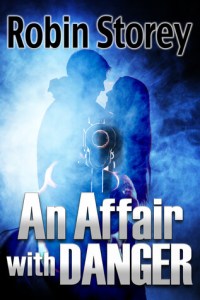 The author gets points for making the novel potentially race along, skipping years where necessary to make the plot move. What redeemed this novel a little was the writing style, and the gentle nature of the male protagonist. He wasn’t all macho, which made it a refreshing change from other romance novels. Not to mention it was a MALE protagonist, which is rare in this genre.
 An Introduction to Kindle Scout!
 Sold as a ‘Coming of Age’ novel, I honestly don’t know why I kept reading this novel. Linda doesn’t even make a choice, as promised in the blurb. She just wanders along in her own life, with no absolution and no explanations.
 This novel hit me. The writing is powerful and it makes the reader slip effortlessly inside each of the women’s minds. Each has a unique view of the world, and their place in it – it seems like they are running their lives, but really there are external, unknown factors making an impact. The reader will be invested irrevocably in the story.