Out of Heart
Irfan Master
Adam is the darkness, joined only to the rest of the world by a thread, bound within his own drawings and head, barely speaking. His sister doesn’t speak, and neither does his mother or grandfather. After his grandfather dies and donates his heart to William, William becomes a fixture in Adam’s house and life.
 This novel felt disjointed and fast. Somehow, 7 months passed and I didn’t notice. There’s hardly enough pages in there for any details. Trying to fit in an abuse/transplant/love/damage storyline was too much, and instead I was left feeling cheated about the whole lot.
I felt disconnected from Adam, and couldn’t even get excited about the fact that he grew a spine somewhere between his childhood (where it wasn’t his fault and it was safer not to have one) and now. Simply, even the violent scenes left me cold, because the prose wasn’t compelling, and I felt distant the whole time. So did Adam, but it’s hard for me to care to keep reading….
The word plays that Adam uses could have been used even more effectively, or perhaps some more images that he drew. Anything! I actually really loved the idea of what he drew on the trains, but it wasn’t clear at all what the point was – if you can only see it from 24 floors in the air! That being said, yet another tortured artist student novel right here.
Does Farah not go to school? What’s wrong with doing dot-to-dots? How long has it been? School seems to feature so little in anything, despite readers listening through a set of school parent-teacher meetings. What are the two jobs Adam’s mom works? How does Adam get to work on time? Where do they live?
Something I hate, and maybe it’s just because I perhaps need glasses, is when thoughts or memories in a novel are included in a special type of script that isn’t just printed text. It almost guarentees I will dislike the novel,
Nothing remarkable to see here. There wasn’t enough substance, it took me about 1 hour to read it, and I didn’t feel like I had gained anything after it because I hadn’t become attached to the characters. I’m giving it 2 stars – I’m not feeling that kindly about it because I have many other novels to read that are (hopefully) way more exciting. I think I need to be more wary of Hot Key books (such as Fly on the Wall), no matter how intriguing they sound.

Allen & Unwin | 28th June 2017 | AU$16.99 | paperback


 The ending! Oh the ending. It should have been more bittersweet, but it wasn’t. Actually, it was just a tad cloying? And I would have appreciated a little more closure. I can say that the rest of the novel was not leading up to that at all. I think this is a problem I had with Lord’s first book too… Perhaps I should have anticipated it more, but I am warned for next time now (and there had better be a next time)!
 I feel like this novel is just another in a series trying to encourage girls into STEM (Science, Technology, Engineering and Math) fields. The last I read,
  And how does everyone not notice anything wrong with her? If she looks like a junkie, why is she not being sent more sternly to a hospital? To a counsellor? Even if she refuses to go, the fact that her self-preservation is completely out of whack doesn’t explain why people are blind, deaf and dumb.
 This was like eating a really bad, stale peanut butter and jelly sandwich. I chewed my way patiently through the first 1/4 of the book, sitting through honestly a quite boring backstory and the party lives of Cat, Bess and some random other person they went to school with. Then, I got some tasty jelly, where we got into the crux of the investigations into the murder and a bit of development of a on-again off-again relationship between Cat and the detective. AND THEN, someone forgot to put the peanut butter in. The next 1/4 was simply Cat and Bess being swaddled around with Cat hating the experience and Bess being pretty happy about it. Then there’s another bit of bread of nothing even really happening until the end. I didn’t care about Cat or Bess enough for it to matter at that point.
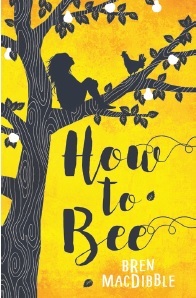 In a future fiction, it’s possible this is going to become common place. Bees are dying out, and despite things such as the somewhat ill informed flower planting schemes by ?cereal? companies, unless we pick up our game with killing bees with pesticides and so forth. A world without fruit would be pretty miserable.
 This was a disappointment of a book. Not only was I frustrated by the constantly changing perspectives that only built a tiny picture of what was happening, the ending was not an ending. Oh my goodness. I’ve just realised that this was the second book. So that means I can expect a third book, so I should just accept the ending. Well, I can tell you reading the first novel probably wouldn’t have made any difference to my non-enjoyment of this one.
 Normally the ‘literature’ style of writing might have put me off – it’s filled with beautiful prose that waxes lyrically about the lines between Man and God. Don’t expect it to ‘end’ in a conclusive manner, instead the reader is left to wonder what good can change in the world.
 I wanted to reread