 An Interview with Darrell Drake, author of A Star-Reckoner’s Lot
I’m not going to be reviewing your newest novel, but from your other published novels, is there one that is your own personal favourite?
There’s actually little struggle in choosing. Where Madness Roosts is the victor when it comes to my first three books. It’s only a novella, and is the only one not to have a print release. Still, it’s far and away my favorite. The limited third-person perspective gave me the liberty to explore its protagonists, and channel through them something like a more down-to-earth Alice in Wonderland. All the while revealing some of their backstory, and that of another more mysterious character that would enter their lives both again and for the first time years later. Cryptic, I know.
I both love and hate novels that don’t leave a discrete ending for the reader. Have you ever felt the need to write sequels?
Despite having written a series that comprises three books all with the same characters, I make an effort to avoid writing anything with a cliffhanger. I don’t think it’s necessarily a bad thing, having a cliffhanger or such, especially in something like a trilogy that’s clearly been broken up because of its length. But I’d rather readers put down my novels with a sense of closure. The story as far as that book is considered is finished. There may be other stories—sequels even—but the book is meant to stand on its own.
 There’s always another novel in the pipeline to write… Tell me about it! Does it have even a working title?
Uh oh. I think I may be in trouble. I, uh, don’t have anything in the pipeline. I know I should, but, uh, you see . . . I don’t. The last few years have been dominated by A Star-Reckoner’s Lot. Creatively and otherwise, it has demanded my attention. Between research, writing, two Kickstarters, and everything in between, I haven’t been able to focus on anything else.
Some advice other writers have given is that your first novel is best sitting in a drawer for a while, because then you feel stronger about chopping up ‘your baby’. Do you still have a copy of your first novel? Whether this was published or unpublished, I need to know!
I do, and I can’t say I disagree. Sage advice indeed. Knowing what I know now, I would have left it in some quiet drawer. Hindsight and all. I stand by it nevertheless. Within Ruin is a worthy tale, even if it wears some of the trappings of a first novel. I think I have the very first print proof around here somewhere. That was a mess that has since been severely polished. I’d purge the first edition if I could.
Do you have a dedicated writing space? How does it meet your writing needs?
I mainly write at my desk, on my computer, which is about as distracting as you can imagine. Were I to write somewhere like the couch, I’d fall asleep without question. But the desk suits my needs, typically with my brilliant cat Merill nearby. Nothing special, really. If I need a change of scenery, I’ll go outside and sit on a bench somewhere. When I was writing A Star-Reckoner’s Lot that bench was at the quiet end of a dying mall. It wasn’t particularly scenic, but it served its purpose. Mainly, I need to be left alone.
What is your writing process? Have you ever thought about changing it? Other authors I have interviewed talk about having an outline – post-it notes in an office, or writing in paper journals. Is there something like that in your writing technique? Or is it all digital for you?
I mainly write the novel digitally, though exceptions are made when I’m writing away from the computer. Journals, then. I’ll use those same journals for jotting down ideas, developing the outline and characters, saving notes, or anything that I think fits. Often, something will come to me just as I’m dozing off at night, and I’ll have to force myself to get up to write it down. For a time, I had a small journal and pen by the bed for that purpose. Although whether or not I can read my drowsy, blindly-penned handwriting the next morning is another matter entirely.
How do you know when a novel or short story is finished? How do you know to step away and let the story speak for itself?
When the loose ends have been tied, and the act has come to a conclusive end that . . . feels right. Definitive. I may leave the future open-ended, but as I said earlier, not on a note that makes a sequel obligatory. That said, an author can’t lead the reader on some meandering course so that everything is neatly spoken for well after the final act has closed. I don’t think anyone wants a long-winded epilogue. A vague response, I realize, but I’m afraid that’s the best I can give.
Do you have a preference for ebook or paperback format? This is for both your own reading and your novels.
Maybe I’m old-fashioned, but I prefer print for everything. You won’t find me in any anti-digital revolution, though. I support e-books; I just don’t like them. The smell of vanilla you get with aged paper is intoxicating, and the texture of the pages is downright toothsome.
Digital content is tied to batteries—even the long-lasting batteries of some of the simpler e-readers. What’s more, I can pick up a book that was written 50 years ago and it will read the same as the day it was printed. Digital content doesn’t come with any promises, beyond what you can back up on your HDD if possible. Technology changes, formats are left behind, and a great many digital-only books will undoubtedly be lost in either the transitions or the aftermath of a company halting support. E-books have earned their place in the market, but they are not a reliable long-term medium.
Social media is a big thing, much to my disgust! How does managing media outlets come into marketing your brand and your books?
I feel you, Rosemarie. Social media doesn’t appeal to me either. But you do what you must, and that calls for social media these days. I try to keep a presence on Twitter, Tumblr, Facebook, and Reddit. Twitter comes easiest, as its character limit encourages less involved updates. Generally, I try to keep folks updated while maintaining a healthy balance of other posts. No one wants to hear about your book every day. I don’t care what marketers are telling you to do. That rude as far as I’m concerned. The only exception would be around launch or a limited-time affair.
For my social media in particular, I post birds and images related to Sasanian Iran. Birdwatching is something of a hobby of mine, and it’s something I can share with my followers which is light and easy to appreciate. Rather than posting facts about Sasanian Iran (the setting of A Star-Reckoner’s Lot), I’ve discovered that people respond better to images. Photos and art are more interesting after all. So birds, history, and some gaming, too. Oh, and my cat. That’s a given.
You have answered other sets of interview questions, is there something you wish someone would have asked you? Or conversely, something you wish they hadn’t asked?
I wish you hadn’t asked about my imaginary next novel! Kidding. I don’t mind. It would have been nice to have more questions tailored to A Star-Reckoner’s Lot. Questions about Sasanian Iran, perhaps, especially considering how unfamiliar people are with the empire. Or about the protagonist’s plight. Maybe her grief, or her illness, or the supporting characters. Or star-reckoning. There’s a great deal to discuss.
But I would not expect as much, because book bloggers are busy. And I appreciate the opportunity you and other bloggers are giving me in interviewing me at all. So I would not look a gift interview in the questions. Thank you for having me, and may the stars never lead you astray.
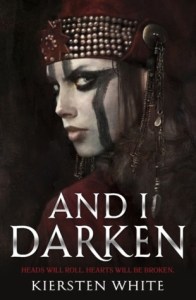 I wanted to like this novel, I really did. But instead it reminded me of Ruined, without the magic. Or maybe Red Queen, which also has that whole creeping up on the throne thing. Have I lost my touch, and I only love fantasy novels again? I don’t think so…


 I really like how the story develops with only hints of Annabel’s problems. It keeps the reader interested, and then invested in both of the characters. Julia too takes some time to get used to, and most of the time I found myself sympathising with her and wishing that she had more guts!
 Kendra! I love you! I love you every time I read you. You’re plucky, irritating, and yet becoming more human all the time. I do wish you weren’t so stubborn, you should know that your friends will go first, but ah well. Everyone has their blind spots right? [How punny!]
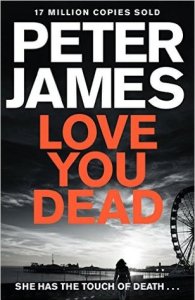 There is no need to have read the 11 books in the Roy Grace series before this. Other reviewers have complained that it took ages for the Detective to enter the story – I didn’t miss this because I didn’t know what to expect of him. I actually loved being in the mind of the ‘Black Widow’ and the other criminals.
 Lily is very… cold. I found it difficult to empathise with her because she seemed unchanged by deaths she had caused. Is it simply a side effect of being a witch? Or is it something else about her character that makes her too much like Lillian. They are the same person after all. I don’t think it was all about Lillian manipulating Lily, much as Rowan wanted to blame her.

 Do you have a dedicated writing space? How does it meet your writing needs?
 There is no feeling of Merlin as a character as she begins simply as a construction of impersonal memories. The novel is plot based, and moves at a relatively fast pace once Merlin encounters other inhabitants of the desolate world. As long as you read this lightly without too many preconceived notions of how an apocalyptic novel should go, you will enjoy it.

 An Interview with Robin Storey