 A Guest Post from Dr. Horowitz on Climate Grief
Far north in western Antarctica, sits the widest glacier in the world. Roughly the size of the state of Florida, and contains enough ice to raise the sea levels by 10 feet: The Thwaites Glacier. Pan toward the eastern portion of the Thwaites Glacier, and you’ll find the Thwaites Ice shelf. Until recently, this ice shelf has held Thwaites back from the ocean. But now, it’s melting- and quickly too. The culprit? Climate change, a crisis of which we are approaching with terrifying rapidity.
Climate change is the defining issue of our time, and we are at the defining moment. Currently, we are edging closer to an environmental precipice. It is vital that we act now before we tip over the edge, with potentially irreversible consequences. Not only will this have disastrous effects on our climate, but on the health of our citizens- in this country, and globally. From shifting weather patterns that threaten food production to rising sea levels that increase the risk of catastrophic flooding, the impacts of climate change are global in scope and unprecedented in scale. Further, with the collapse of biodiversity, comes the spread of infectious diseases. Vector-borne infections are already on the rise, and there is evidence that as permafrost melts, we may encounter new infections, triggering another pandemic.
 So, what could our world look like if we continue on our current path? That is the future I imagine in my upcoming novel, Starseed R/evolution: The Awakening. The year is 2037, and the Earth is in the midst of a deadly climate crisis, prompting the massive spread of various vector-borne diseases, such as Lyme disease and West Nile virus. Chemical pollutants have left birth rates at an all-time low, and crop destruction has led to massive famines. The world’s only hope lies in the hands of Crown Prince Ian, the last surviving heir of the Royal Arcturian Family of Antwar. He’s a half-human/half-alien with an IQ approaching 200, a penchant for Swiss chocolates, and defending humanity from itself.
I’ll be honest, penning a cli-fi novel wasn’t originally on my bucket list. I have worked as a physician treating individuals with Lyme and tick-borne diseases for over 30 years. My previously published books are purely scientific in nature, and outline how healthcare providers can effectively diagnose and treat resistant chronic illness. However, the worlds of healthcare and climate science are far closer than one might imagine. According to the World Health Organization, “Between 2030 and 2050, climate change is expected to cause approximately 250,000 additional deaths per year, from malnutrition, malaria, diarrhea and heat stress.” As someone who has taken an oath to heal, how could I ignore this quickly impending health crisis?
Further, I began to see the grim effects of climate change in my day-to-day work. A good deal of my patients are young adults. Following treatment, I would ask them, “What do you plan on doing with your life now that you’re healthy”? Quite often, the response was the same, “Nothing, what’s the point”. These young people were struck by what is known as “climate grief”. To them, the state of the planet seemed so hopeless, that what they wanted to do with their lives was irrelevant and meaningless. It was at that point that I knew I needed to do a deep dive into climate science literature, to get a better understanding of my patients’ mentalities. Unfortunately, I found that they were right. The planet was in trouble, and world leaders were ignoring climate science and putting everyone’s futures at risk.
Starseed R/evolution: The Awakening arose primarily out of my desire to combat this “climate grief” in my young patients. I wanted to disseminate vital information in a way that would have the reader laughing and learning simultaneously. The truth is, we do need radical change if we are to avoid a potential climate disaster, but that change is possible. Throughout the novel, I have outlined real-world scientific and cultural solutions. If enough people are truly committed to making a difference, I believe we can use these solutions to make our planet a safer and healthier place for everyone to live. The Earth is in trouble, so let’s all roll up our sleeves and get to work. If you’re interested in joining the “r/evolution”, my book is available for pre-order now!
About the Author
From the mind of acclaimed physician and author, Dr. Richard Horowitz, MD comes a new novel: Starseed R/evolution: The Awakening. Dr. Richard Horowitz, MD is a board-certified internist with 30+ years of experience treating over 13,000 patients for tick-borne disorders and complex autoimmune conditions. He is the author of two national best-selling books on Lyme disease (Why Can’t I Get Better? St Martin’s Press, 2013, NY Times Best Seller; How Can I Get Better? St Martin’s Press, 2017, National Bestseller). After years of treating complex patients, Dr. Horowitz felt called to treat a newer, and much larger patient: Mother Earth.


 There is a trend at the moment to have characters off screen who (may) have committed suicide. If this is something that triggers you, you probably should avoid this novel. I found the subject to be treated sensitively and without blame. There is also a physically abusive relationship in the novel.
 I like the play-on-words in the title, very smick! Unfortunately, that was where my enjoyment ended. I don’t understand this novel. It’s going to appeal to a super specific audience, one that feels like the fashion industry is where they should be. Specifically, the magazine/printed word fashion scene. If you enjoyed
 This novel was breathtaking. I couldn’t bare to put it down – I needed to read right to the very (bitter) end. Several hours later, and I’m still thinking about Jamie and Andrew and the future. I sank deeply into the universe and felt the dirty sneakers on their feet as my own. I couldn’t decide which character I liked more, which is quite rare for me with a dual narrator (usually I like the first one introduced the best).
 Another reviewer has put this really well – ‘all the characters are morons’! Oh! It’s so true! They could all go die, I couldn’t have cared less about the outcome.
 Growing Up in Flames is theoretically a great young adult novel about the impact of potential bushfires on teenagers growing up in remote and regional areas of Australia. Unfortunately, although the main characters seemed to fear fire, it seemed to be used as a plot point that didn’t actually have a reasonable or even legally appropriate ending.
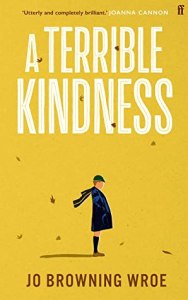 A Terrible Kindness was a bit of an odd book in the way that it jumped forwards and backwards through time. What I was expecting was a book that had a bit more about the intricacies of embalming and looking after body after it has died. From the back cover, I thought that I was going to learn about different techniques that could be particularly used in an example where the bodies were quite degraded. Also, a direct discussion of about how traumatic it can be to embalm a child.
 Wow. This is a heartbreaking and heartwarming account of one woman’s live destroying disease and how she got through and lives with her condition. I could hardly believe that doctors had gotten it so wrong, and the huge impact of a clinical trial gone wrong on the rest of her life. Remember that you don’t have an obligation to participate in something, but you do have an obligation to make the most of what you have. This is something the author realised over time, thankfully not too late.
 I have been ‘enjoying’ a number of non-fiction novels lately about the Holocaust. I say ‘enjoying’, but really they are quite sad reads due to the devastating loss of life as a result of Hitler’s anti-Semitic policies. I found myself horrified and yet not surprised at the level of brutality exhibited by the Nazi’s. It’s one thing to have a critical idea of World War II (as I’ve said before, my history knowledge is poor) and another to really experience it as these writers did.
 This book really dives into all the insights of habits and leaves pretty much nothing out. It gives an in depth understanding of how habits are formed and how to start new habits. My only downside was that it had a lot of tips to create new habits but not a lot on changing old ones.