Can I Steal You for a Second?
Jodi McAlister
Amanda is keen to get over her last relationship – surely a break in a house full of other women and a single Romeo is the way to go? She has nothing to lose and everything to gain from a potential relationship. Or maybe she’ll find love? There’s two Dylans to choose from after all!
 Mandie is such a sympathetic character. She has low self-esteem and her list of things that she is good at does at least get a little longer during the course of the book. Unfortunately, I didn’t really feel like she had made real progress. She’s definitely just fallen for a person too quickly. Being trapped with someone during COVID lockdowns in Melbourne forces quick relationships (a great example is 56 days if you are looking for a psychological thriller).
I think that the author creates understandable characters but I am left wanting more substance. I know it’s just ‘fluffy romance’ and I should be grateful for non-Caucasian, non-heteronormative relationships at all, but I wanted to see more convincing character growth in general. The marketing brief is so proud that the author is a Lecturer, rather than ‘just’ a romance writing – but I still expected more.
This book is to be read in parallel with Here for the Right Reasons. I actually think you should read this one first, as there would be less spoilers that way (but of course there’s still a happily ever after). I’ve read another romance book from this author (Valentine), and it’s clear the author has a ‘type’. But the end of this one promises that there will also be a Lily and Murray book. WHY? Move on, deliver me a new story!
I’m giving this four stars, which is perhaps a bit generous. I did definitely have some real laugh out loud moments (not a spelt-out lol) and there were several bits where I needed to share the text with someone else! Worth reading, but perhaps not worth owning unless you want to relive reality TV during a lockdown more than once.

Simon and Schuster | 5th April 2023 | AU$22.99 | paperback


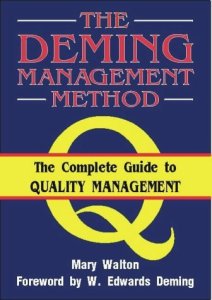 This book is an interesting read, but not for everyone. It is clearly an older book that is written in an older manner, but it is still applicable and not completely outdated. It’s a little dense and takes a while to get into it. I felt that the long introduction / background on Dr Deming was very interesting.
 It’s nice to have a character with a chronic illness that makes it difficult for her to be a main character! It’s very unfair and biased that many heroes are strong or even just plain healthy when the reality is that many people live with unseen conditions. Spoons! So in a way that almost made this book redeemable, but not quite.
 This is a kiddie book! Everything is explicitly spelt (haha) out, there is no independent thought involved. The reader is told how to react to each ‘revelation’ and everything is foreshadowed so much that you can see the ending coming from a mile away! Everything every character does contains why they did it, how everyone reacts, and how the reader should react. The big secret isn’t really a secret.
 Is the title long enough? The timeline in this and the in-brackets asides made this novel not really work for me. I had trouble keeping track of whose perspective I was reading, and so I didn’t really follow who didn’t like who or not? This, combined with essentially flashbacks, made it very tricky for me to follow. Ultimately it didn’t really matter though, because it’s pretty obvious how this novel is going to end. It wouldn’t be YA if it didn’t have a happy ending!
 I didn’t feel gripped by this novel. I picked up and finished a couple of non-fiction books concurrently with this one because I wasn’t drawn to Felix. The way that Felix didn’t seem to see love when he was looking for it felt true to me. I felt a little blindsided though by the ending, because I didn’t see how Felix could be so oblivious. I don’t see why a poly relationship couldn’t have worked as well.
 I knew heading into this novel that it wouldn’t finish properly because this author has a bad habit of writing trilogies where the second book is a bit weak (
 I liked Sean! Poor guy. Honestly the title and the cover made me feel a bit worried about hating it, but I empathised with Sean quite well. I was the same as Sean when Australia decided to waste money on whether we should let gay people marry or not. There’s plenty of perspectives to choose from here, and the author has done a great job of illuminating just some of the problematic attitudes in Australia. I hope we’ve come a lot further than 2017, but I’m honestly not sure.
 What was good about this novel was the internal anguish of Milo trying to reconcile his homosexuality and his religious beliefs. It’s impressive how much internalised homophobia Milo had even after a single summer of feeling feelings for the wrong gender. Milo is very distressed, but also an idiot.
